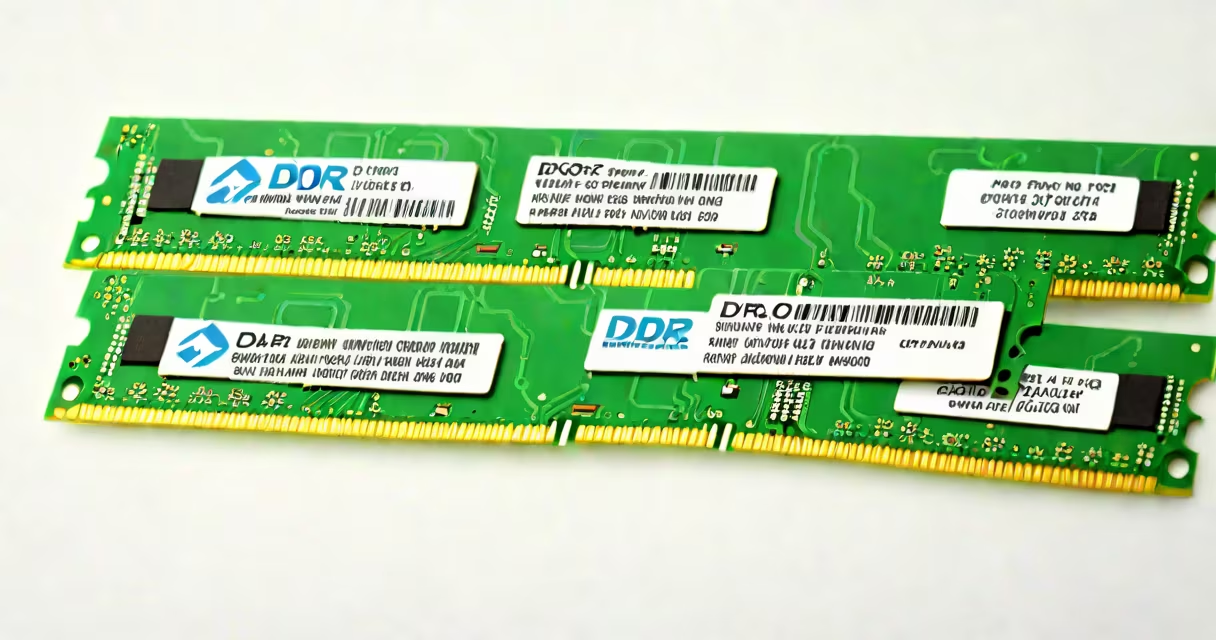
1 GB DDR2 RAM is a 1-gigabyte memory module using double data rate two (DDR2) technology, a type of synchronous changing random-access memory (SDRAM) introduced in 2003. It was commonly installed in desktop and laptop computers during the mid-2000s.
DDR2 RAM transfers data twice per clock cycle, unlike single data rate (SDR) RAM, which transfers data once. This "double pumping" allows DDR2 to achieve higher bandwidth than its predecessor, DDR (double data rate). A 1 GB DDR2 RAM module typically operates at speeds ranging from 200 MHz to 533 MHz, with an effective data rate of 400 MHz to 1066 MHz.
1 GB DDR2 RAM modules have specific electrical and physical characteristics:
1 GB DDR2 RAM was widely used in mid-2000s consumer and business PCs due to its balance of performance and cost. It supported Intel's Pentium D and Core 2 processors, as well as AMD's Athlon 64 and Phenom CPUs. Many budget and mid-range laptops also used 1 GB DDR2 RAM modules.
For example, the Dell XPS 410 desktop, released in 2006, came with 1 GB DDR2 RAM as standard and supported up to 4 GB with four modules. This configuration provided sufficient memory for everyday tasks like web browsing, office applications, and light multimedia editing.
Many people confuse DDR2 RAM with DDR3 RAM. While both are types of SDRAM, DDR3 offers higher speeds, lower voltage, and greater capacity. For instance, a 1 GB DDR3 RAM module operates at 800 MHz to 1600 MHz effective data rate, compared to DDR2's 400 MHz to 1066 MHz.
Another misconception is that DDR2 RAM is backward-compatible with DDR slots. This is incorrect: DDR2 uses a different pin configuration and requires a different slot design. Attempting to install a DDR2 module into a DDR slot can damage both the module and the motherboard.
DDR2 RAM was eventually replaced by DDR3 RAM, which offered higher data rates, lower power consumption, and larger capacities. By 2010, most new computers shipped with DDR3 RAM, and DDR2 became obsolete for new systems. However, DDR2 RAM remains in use in some legacy systems and embedded devices.
According to the Intel DDR2 specification, DDR2 RAM was designed for high-volume server and client applications. Its successor, DDR3, improved upon these designs with better performance and efficiency.