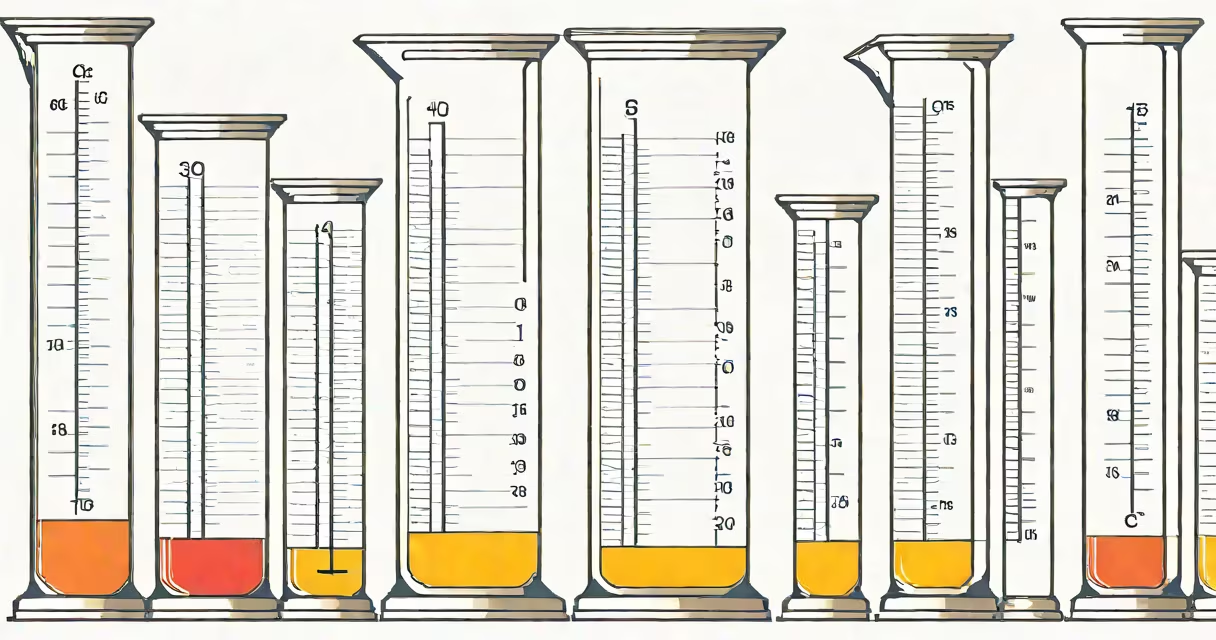
A 36 h cup is a metric unit of liquid volume equal to 36 hectoliters (hl), or 360 liters. It's primarily used in large-scale industrial, agricultural, and scientific contexts.
The "h" in 36 h cup stands for hectoliter, a metric unit equal to 100 liters. A single hectoliter contains roughly 26.4 gallons, making the 36 h cup equivalent to about 952 gallons. This size is far larger than standard kitchen measuring cups, which typically max out at 1 cup (240 milliliters).
This measurement is most common in industries like brewing, winemaking, and large-scale food processing. For example, a commercial brewery might track production in 36 h cups to monitor batch sizes efficiently. It's also used in water treatment facilities to measure large volumes of liquids.
Imagine a large dairy farm needing to measure milk output daily. Instead of using smaller units, they might track production in 36 h cups. If the farm produces 360 liters of milk in a day, that's exactly 1 36 h cup. This simplifies record-keeping and allows for easier scaling of operations.
In my own experience, working with a local winery, we used 36 h cups to measure grape juice during harvest. This helped us quickly assess yield and ensure consistency across batches.
The 36 h cup is a specialized metric unit for measuring large liquid volumes, primarily used in industrial and scientific settings. Unlike standard kitchen measuring cups, it's designed for bulk measurements, making it invaluable in fields like brewing, agriculture, and water treatment.