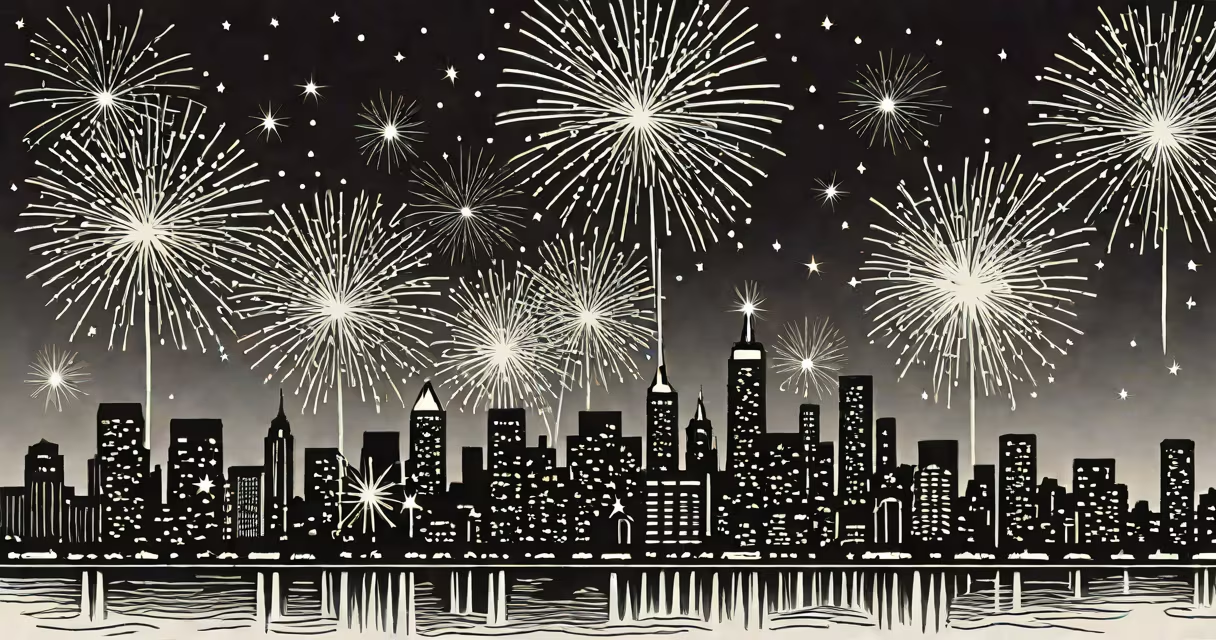
The 4th of July, or Independence Day, celebrates the adoption of the Declaration of Independence on July 4, 1776, declaring the U.S. free from British rule. The holiday features fireworks, parades, and family gatherings.
Congress voted for independence on July 2, 1776, but the final wording of the Declaration was approved two days later. The document, primarily written by Thomas Jefferson, announced the colonies' separation from Britain. The holiday became a federal holiday in 1870 and has since grown into a major celebration of American patriotism.
Celebrations vary but often include:
The holiday is celebrated across the U.S., with major events in cities like Philadelphia (where the Liberty Bell is tapped 13 times) and Chicago (with a fireworks show over Lake Michigan). It commemorates the birth of American independence and the ideals of freedom and democracy.
Many assume July 4th marks the signing of the Declaration, but only two signers, John Adams and Charles Thomson, signed it on that day. Most delegates signed on August 2, 1776., the holiday wasn't widely celebrated until after the War of 1812, as Americans sought to reaffirm their national identity.
In 2023, the Civil Rights Act of 1964 was signed on July 2, which some confuse with Independence Day celebrations. The two dates are unrelated.
In 2022, New York City's Macy's fireworks display set off 50,000 shells over the East River, drawing over 3 million spectators. The show lasted 25 minutes and included synchronized music broadcast on local radio stations. Similar displays occur in cities nationwide, making it a quintessential part of the holiday.
Last year, I attended a small-town parade in Vermont. The local high school band played patriotic tunes, and neighbors set up tables with homemade pies. The sense of community and shared pride in American history made the experience memorable.