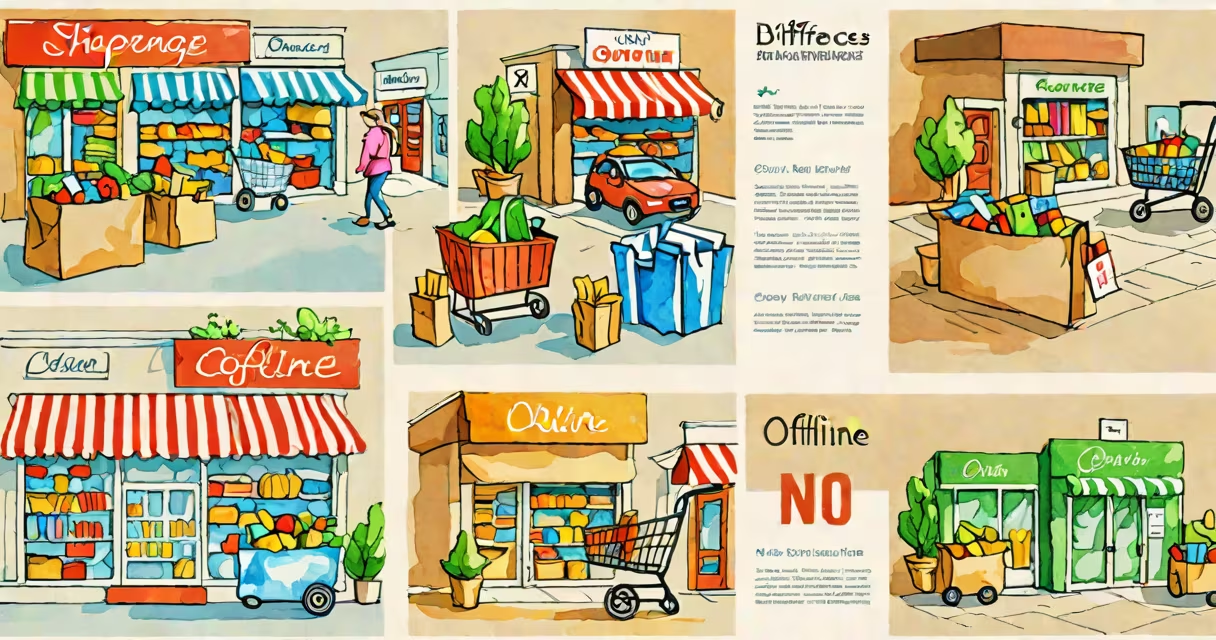
Online shopping differs from traditional retail in five key ways: convenience, pricing, product selection, customer interaction, and operational costs. These differences shape how consumers buy goods and services.
Online shopping offers unique convenience. Consumers can browse and purchase items anytime, anywhere, using smartphones, tablets, or computers. Traditional retail requires physical travel to stores during operating hours.
For example, ordering groceries online through services like Instacart saves time compared to visiting a supermarket. A 2022 study by Statista found that 2.14 billion people worldwide shop online, highlighting its global reach.
Online retailers often provide lower prices due to reduced overhead costs. They frequently offer discounts, coupon codes, and changing pricing based on demand and competition.
Traditional stores have fixed prices, though they may occasionally run sales. Online platforms like Amazon and eBay allow price comparisons across multiple sellers, empowering consumers to find the best deals.
E-commerce platforms typically offer a wider range of products. Online stores aren't limited by physical shelf space, enabling them to stock extensive inventories.
Online shopping often lacks immediate, face-to-face customer support. While live chat and email support exist, they can't replace in-person assistance. Traditional retail allows customers to ask questions, inspect products, and receive instant help from staff.
However, online reviews and ratings help consumers make informed decisions. Websites like Yelp and Google Reviews provide feedback from other buyers, compensating for the absence of direct interaction.
Online businesses generally have lower operational costs. They don't need to maintain physical storefronts, pay rent, or hire as many employees. This efficiency translates to lower prices for consumers.
Traditional retailers incur higher expenses for rent, utilities, and in-store staff. These costs are passed on to customers in the form of higher prices. However, physical stores offer immediate gratification-customers leave with their purchases instantly, whereas online orders may take days to arrive.
The shift to online shopping continues to grow, driven by convenience and technological advancements. Understanding these five differences helps consumers choose the best shopping method for their needs.