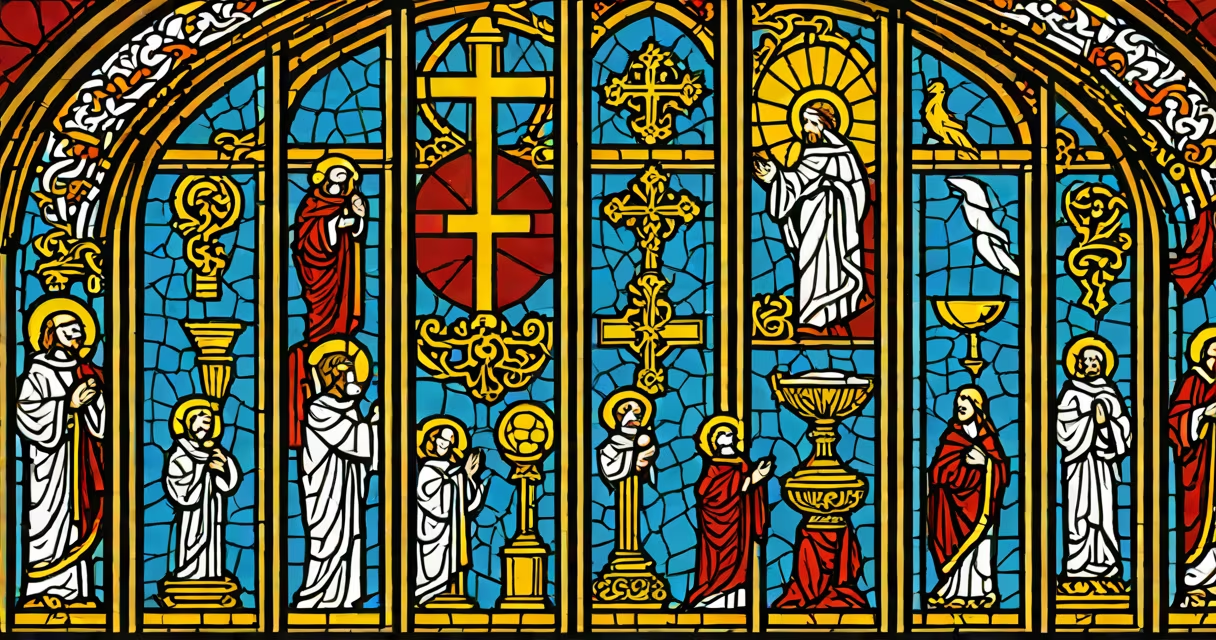
The 7 sacraments are sacred rites in Catholicism that convey divine grace through visible signs. These rituals were instituted by Christ and are seen as channels of God's grace to believers.
Each sacrament consists of two parts: an outward sign (like water in baptism) and an inward grace (spiritual transformation). The Church teaches that Christ gave these sacraments to the apostles, who passed them to the Church.
For example, baptism uses water to symbolize spiritual cleansing. The grace received is forgiveness of original sin and becoming a child of God. This dual nature makes sacraments both visible and invisible at once.
| Sacrament | Common Name | Primary Grace |
|---|---|---|
| Baptism | Washing | Remission of original sin |
| Confirmation | Sealing | Strengthening of faith |
| Eucharist | Communion | Spiritual nourishment |
| Penance | Confession | Forgiveness of sins |
| Anointing of the Sick | Last Rites | Healing and strength |
| Holy Orders | Ordination | Spiritual authority |
| Matrimony | Marriage | Grace for family life |
The sacraments are administered within Catholic worship services. Baptism often occurs during infancy, while Confirmation typically happens in adolescence. The Eucharist is celebrated at every Mass, and Penance can occur anytime in a confessional.
A common misconception is that sacraments are merely symbolic. However, Catholics believe they actually effect what they signify - grace is truly conferred. For instance, during the Eucharist, bread and wine become the actual body and blood of Christ (transubstantiation).
The sacraments find their basis in both the Old and New Testaments. Baptism echoes the flood (Genesis 6-9) and circumcision (Genesis 17), while the Eucharist references the Passover (Exodus 12) and Last Supper (Matthew 26:26-28).
The current form of the seven sacraments was formalized at the Council of Trent (1545-1563) in response to the Protestant Reformation. This council affirmed Catholic teaching against Protestant views that saw sacraments as merely human traditions.
Another myth is that sacraments are magical. Catholics emphasize they require proper disposition - the recipient must have faith and intend to receive grace. For example, someone receiving Communion unworthily commits sacrilege (1 Corinthians 11:27-29).
When I visited a Catholic church, I noticed how central the sacraments were to worship. The altar, confessionals, and baptismal font were all prominently placed, showing their importance in Catholic life.
The 7 sacraments form the heart of Catholic sacramental theology, providing visible signs of invisible grace., they mark key moments in a believer's life, offering spiritual nourishment and transformation.