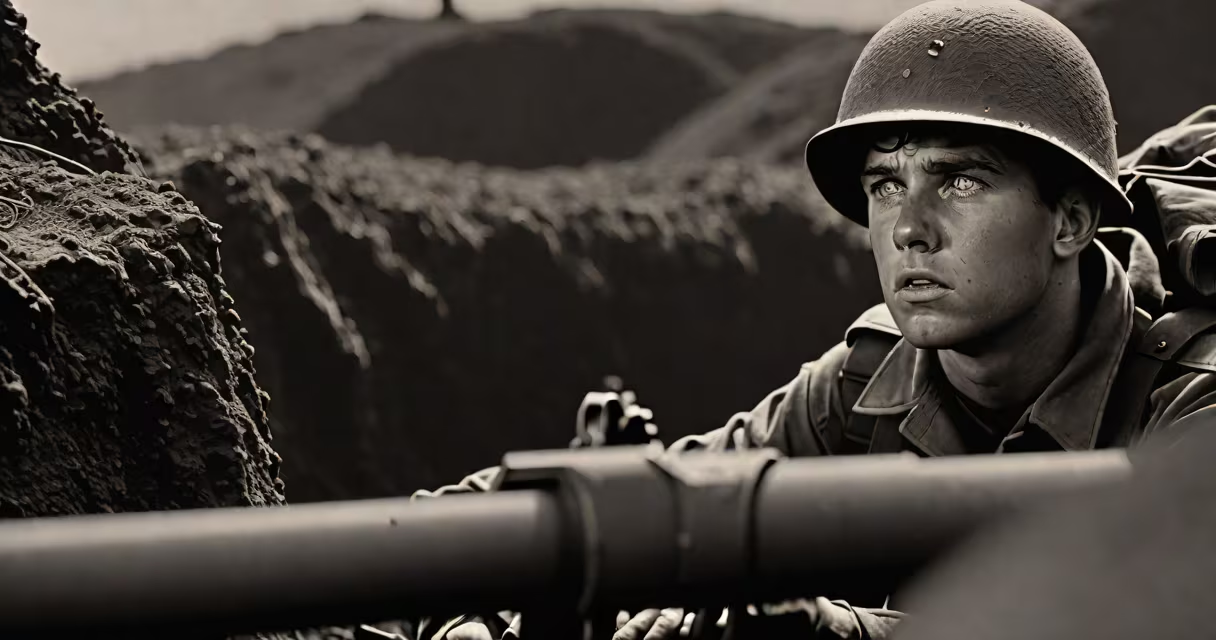
All Quiet on the Western Front 1979 is a British television miniseries adaptation of Erich Maria Remarque's 1929 anti-war novel. This version, directed by Delbert Mann, offers a stark portrayal of World War I through the eyes of German soldier Paul Bäumer.
The 1979 miniseries stands apart from the 1930 film adaptation, which was the first sound film to win Best Picture at the Academy Awards. Unlike the earlier black-and-white movie, the 1979 version is presented in color, adding a layer of realism to the war scenes. The miniseries format allows for deeper character development and a more detailed exploration of themes like disillusionment and the futility of war.
The miniseries features Richard Thomas as Paul Bäumer, a young German soldier whose idealism is shattered by the horrors of trench warfare. Other key cast members include:
The miniseries captures the essence of Remarque's novel by emphasizing the psychological toll of war on soldiers. Unlike Hollywood's tendency to glorify battle, this adaptation focuses on the grim realities faced by ordinary men thrust into extraordinary circumstances. The series' extended runtime allows for a more detailed examination of Paul's internal struggle, making it a compelling watch for those interested in anti-war narratives.
A notable aspect of the 1979 version is its attention to historical accuracy. The sets, costumes, and battle sequences were carefully crafted to reflect the conditions of World War I. This dedication to authenticity enhances the viewing experience, immersing audiences in the harsh environment of the Western Front.
All Quiet on the Western Front 1979 remains a useful anti-war film that captures the essence of Remarque's novel while offering a fresh perspective on the devastation of World War I. Its realistic portrayal of war, combined with strong performances and historical accuracy, makes it a standout adaptation worth watching.