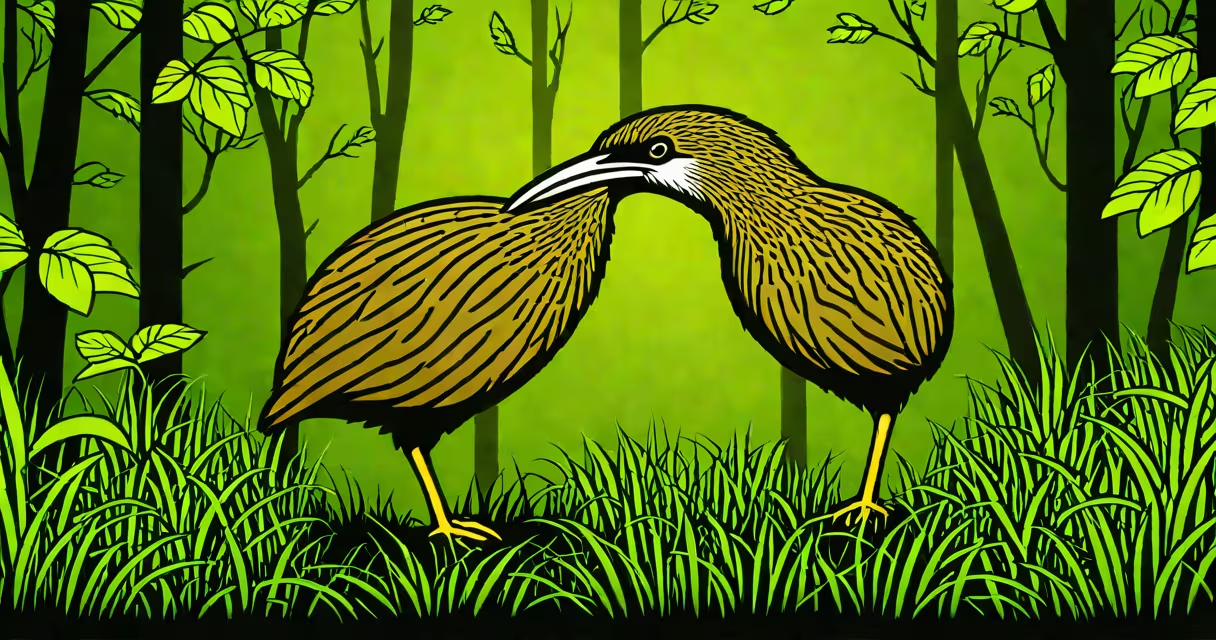
Kiwi birds are nocturnal, meaning they are most active during the night. These flightless birds, native to New Zealand, have adapted to a nighttime lifestyle to avoid predators and forage for food under the cover of darkness.
Kiwi birds have several physical adaptations that make them well-suited for nocturnal living. Their large nostrils, located near the tip of their beak, allow them to detect earthworms and other prey by scent, even in complete darkness. Their small eyes and keen sense of smell further aid their nighttime foraging.
There are five recognized species of kiwi birds, each with slight variations in size and habitat preferences:
| Species | Average Size | Habitat |
|---|---|---|
| North Island brown kiwi | 2.3 kg (5 lbs) | Forests and scrublands |
| South Island brown kiwi | 2.6 kg (5.7 lbs) | Beaches and forests |
| Great spotted kiwi | 3.3 kg (7.3 lbs) | Hilly and mountainous regions |
| Little spotted kiwi | 1.2 kg (2.6 lbs) | Coastal forests |
| Rowi (Okarito kiwi) | 2.1 kg (4.6 lbs) | Wetland areas |
Kiwi birds evolved to be nocturnal primarily to avoid predators introduced by humans, such as stoats, cats, and dogs. By foraging at night, they reduce their risk of encountering these threats., their diet consists mostly of insects, worms, and small invertebrates, which are more abundant and easier to find in the damp, cool conditions of nighttime.
Many people assume that kiwi birds are completely blind or that they only eat fruit. In reality, kiwi birds have functional eyesight, though it is not their primary sense. They rely heavily on their sense of smell to locate food. While they do consume some fruit, their diet is predominantly protein-based, including insects, worms, and small amphibians.
During a visit to a wildlife sanctuary in New Zealand, I had the opportunity to observe kiwi birds in their natural habitat. The experience was fascinating, as I witnessed firsthand how these birds use their keen sense of smell to forage for food under the cover of darkness. It was a unique glimpse into the life of one of New Zealand's most iconic and mysterious creatures.