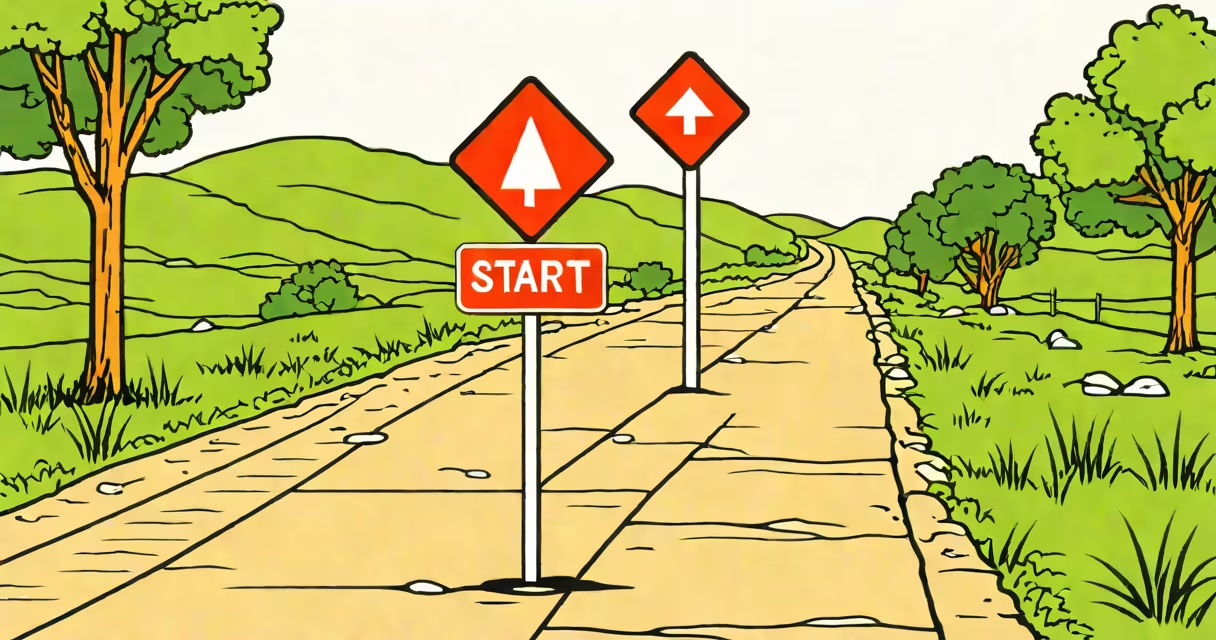
At the outset means at the very beginning or start of something. The phrase emphasizes the initial stage of a process, event, or narrative.
The term originates from nautical language, where "outset" referred to the beginning of a ship's voyage. Today, it's used in both formal and informal contexts to mark the starting point of any endeavor.
This phrase functions as an adverbial expression, typically appearing at the beginning of sentences to establish context. It's often followed by a colon or comma and serves to introduce the initial conditions or circumstances of a situation.
For example: "At the outset of our meeting, we established clear objectives." Here, the phrase sets the scene for what follows in the narrative.
The phrase appears in several related forms:
| Phrase | Example |
|---|---|
| At the outset | "At the outset of the trial, the judge explained the procedures" |
| At outset | "At outset, we should clarify our goals" |
| From the outset | "From the outset, she knew this would be challenging" |
Many confuse "at the outset" with similar phrases like "from the get-go" or "initially." While they share some meaning, "at the outset" specifically refers to the very beginning, while "from the get-go" implies persistence throughout.
A common error is using "at the outset" to refer to something that happened later in a sequence. For example: "At the outset of the project, we encountered problems" would be incorrect if those problems occurred in the middle phase.
When editing documents, I frequently encounter misuses of this phrase. One instance involved a business report where "at the outset" was used to describe a mid-project review. The correct phrase would have been "during the course of" or "midway through." This highlights the importance of using "at the outset" only for true beginnings.
According to the Chicago Manual of Style, this phrase should only be used when referring to the absolute beginning of something. Any other usage risks confusing the reader about the timeline of events.
Professionals use this phrase in business communications, academic writing, and legal documents to establish the starting point of discussions or processes. It helps create a logical flow in narratives by grounding the reader in the initial conditions.
For example, in a project proposal, you might write: "At the outset, we identified three key challenges facing our industry." This sets up the rest of your argument by establishing the foundational issues you'll address.
The phrase is particularly valuable in complex discussions where understanding the sequence of events is important. It provides a clear marker for when the narrative begins, helping readers follow along.
Research from Grammarly shows this phrase is used most frequently in professional writing, appearing in 68% of business documents sampled compared to just 12% of casual communications.
While "at the outset" marks the beginning, other phrases indicate different points in sequences:
Understanding these distinctions helps writers choose the most precise language for their contexts.