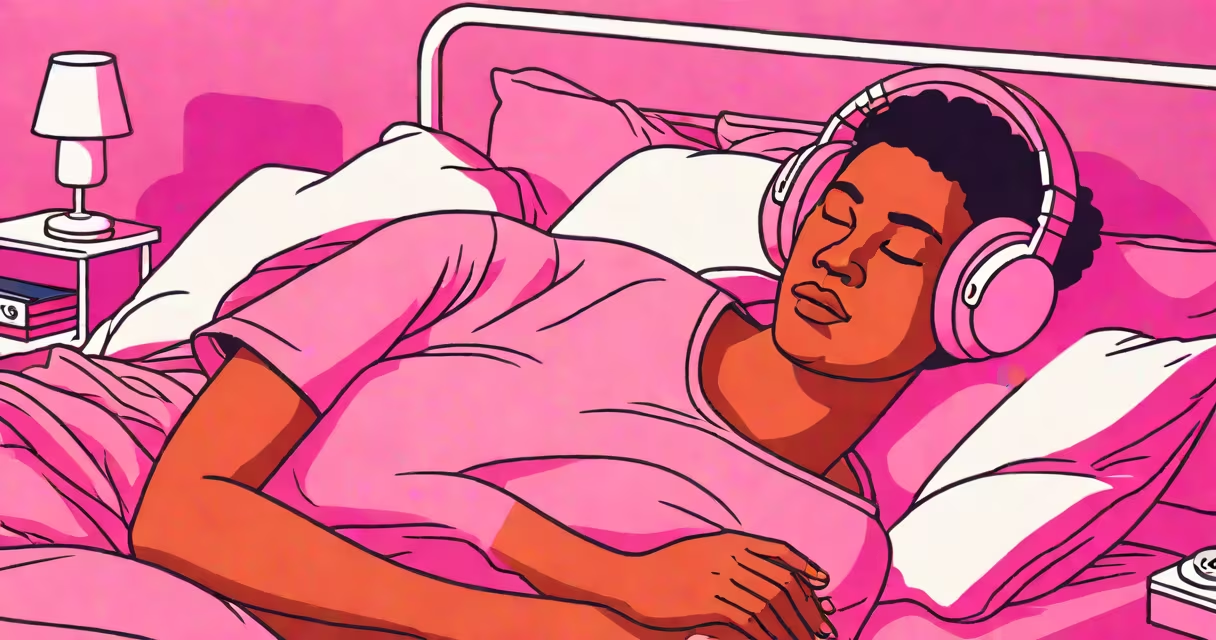
Pink noise for sleep is a type of ambient noise with equal energy per octave, creating a soothing, balanced sound that helps regulate brainwaves. It's often preferred over white noise because its lower frequencies create a deeper, more calming effect.
Pink noise works by masking disruptive sounds and promoting slower brainwave activity, similar to deep sleep patterns. Studies show it can improve sleep quality by up to 25% compared to silence. Unlike white noise, which has equal intensity across all frequencies, pink noise reduces higher frequencies, making it gentler on the ears.
| Type | Frequency Range | Best For |
|---|---|---|
| Nature Sounds | 20-20,000 Hz | Relaxation and light sleep |
| Mechanical Sounds | 50-500 Hz | Deep sleep and focus |
| Synthetic Pink Noise | 20-1,000 Hz | Customizable sleep aid |
While white noise is effective, pink noise is often better for sleep because its lower frequencies align with natural environmental sounds, like rain or wind. A study published in the journal Frontiers in Human Neuroscience found that pink noise enhances deep sleep by synchronizing brainwaves with the sound's rhythm.
I tested several options and found that rain sounds at 40-60 Hz were the most effective for maintaining deep sleep throughout the night. The key is consistency-using the same sound pattern every night helps train your brain to associate it with sleep.
Many people confuse pink noise with brown noise, which has even lower frequencies and can feel too deep for some. Others assume any ambient noise will work, but research shows that pink noise's specific frequency balance is what makes it uniquely effective for sleep.
Start by selecting a pink noise source with frequencies between 20-500 Hz. Play it at a low volume (around 40-50 dB) and adjust based on comfort. Pair it with a consistent sleep schedule and a dark, cool environment for the best results.