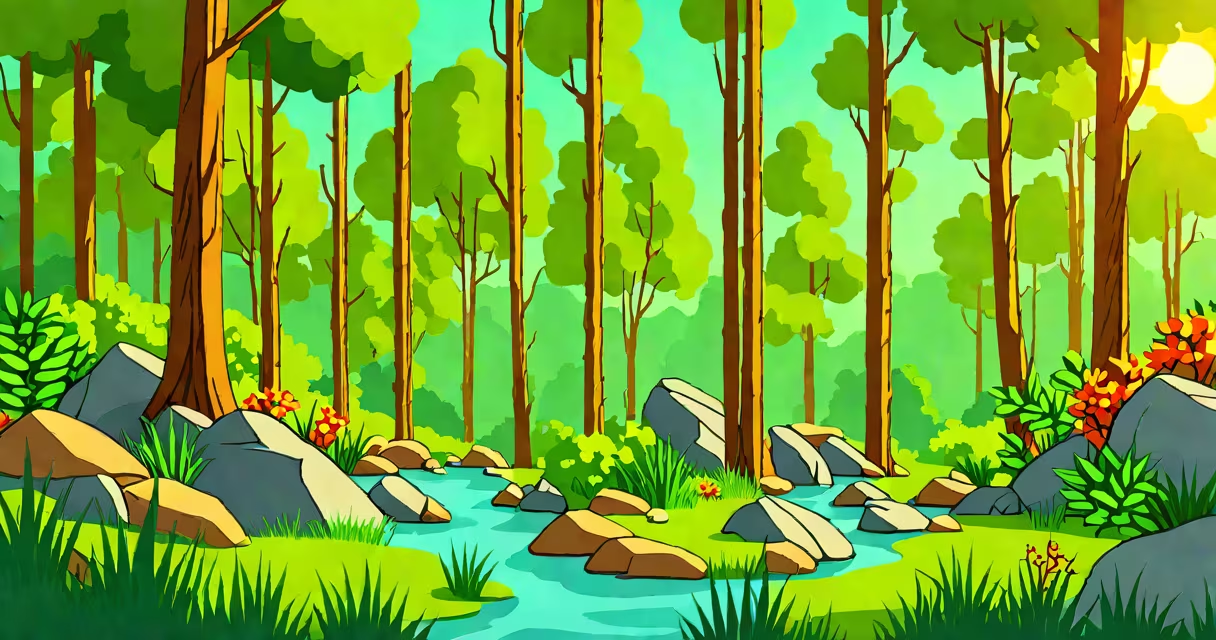
Biotic refers to living components of ecosystems, while abiotic refers to nonliving physical and chemical factors. Together, they form the foundation of ecological systems.
These factors work together to create habitats and influence species survival. For example, sunlight (abiotic) enables photosynthesis in plants (biotic), which then provide food and shelter for animals.
For instance, in a forest system, oak trees are producers, deer are consumers, and mushrooms are decomposers.
| Abiotic Factor | Examples |
|---|---|
| Climate | Temperature, precipitation, humidity |
| Geology | Rock types, soil composition |
| Topography | Mountains, valleys, slopes |
| Water | Rainfall, rivers, ocean currents |
| Light | Sunlight intensity, day length |
Many confuse biotic factors with only animals, overlooking plants and microorganisms. Similarly, abiotic factors aren't just weather - they include geological features and light conditions that shape ecosystems.
While hiking in the Appalachian Mountains, I noticed how sunlight (abiotic) enabled tree growth (biotic), creating shade that altered understory plant distribution. This direct observation showed the interplay between these factors.