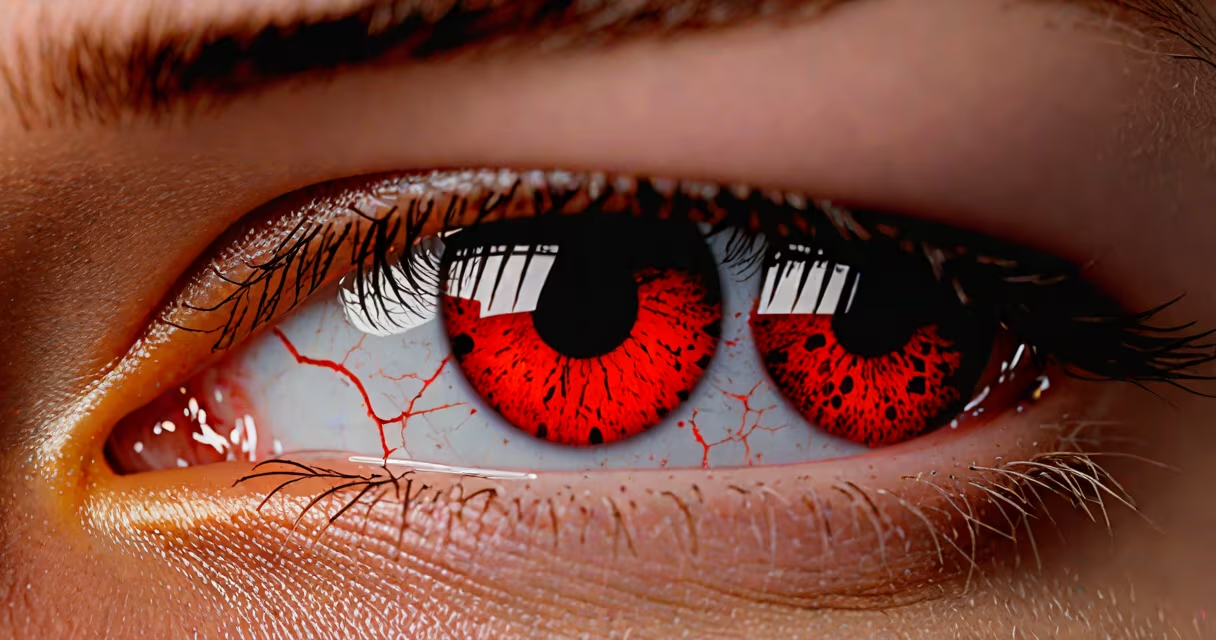
Blood in the eye typically indicates a subconjunctival hemorrhage, where blood pools under the clear tissue covering the white part of the eye. This usually appears as a bright red patch and is harmless in most cases.
A subconjunctival hemorrhage happens when small blood vessels break just beneath the eye's surface. The blood becomes trapped, creating a visible red spot. This can occur from minor injuries, such as rubbing your eyes too hard, or even from sneezing or coughing forcefully. Unlike other types of eye injuries, this condition doesn't involve bleeding inside the eye itself.
Eye bleeding can happen in different parts of the eye, each with varying levels of severity:
| Type | Location | Severity |
|---|---|---|
| Subconjunctival hemorrhage | Surface of the eye (conjunctiva) | Minor, usually harmless |
| Hyphema | Front chamber of the eye | Moderate to severe, requires medical attention |
| Vitreous hemorrhage | Gel-like center of the eye (vitreous humor) | Severe, often linked to retinal issues |
Most cases of blood in the eye result from minor incidents, such as:
Less commonly, it may signal underlying health issues like high blood pressure or diabetes, which can weaken blood vessels.
While most subconjunctival hemorrhages resolve on their own within a week or two, seek medical advice if:
Another common mistake is confusing blood in the urine with blood in the eye. While both can signal underlying health concerns, they require different diagnostic approaches. For more on blood in urine, see our guide.
Last year, I woke up to a bright red spot covering half my eye's white. Panicked, I assumed I had injured myself during sleep. After researching, I realized it was likely a subconjunctival hemorrhage. Within days, the redness faded without treatment, confirming its harmless nature.
Blood in the eye usually points to a subconjunctival hemorrhage, a minor condition that resolves on its own. However, if symptoms persist or worsen, consulting a healthcare professional ensures proper diagnosis and treatment.