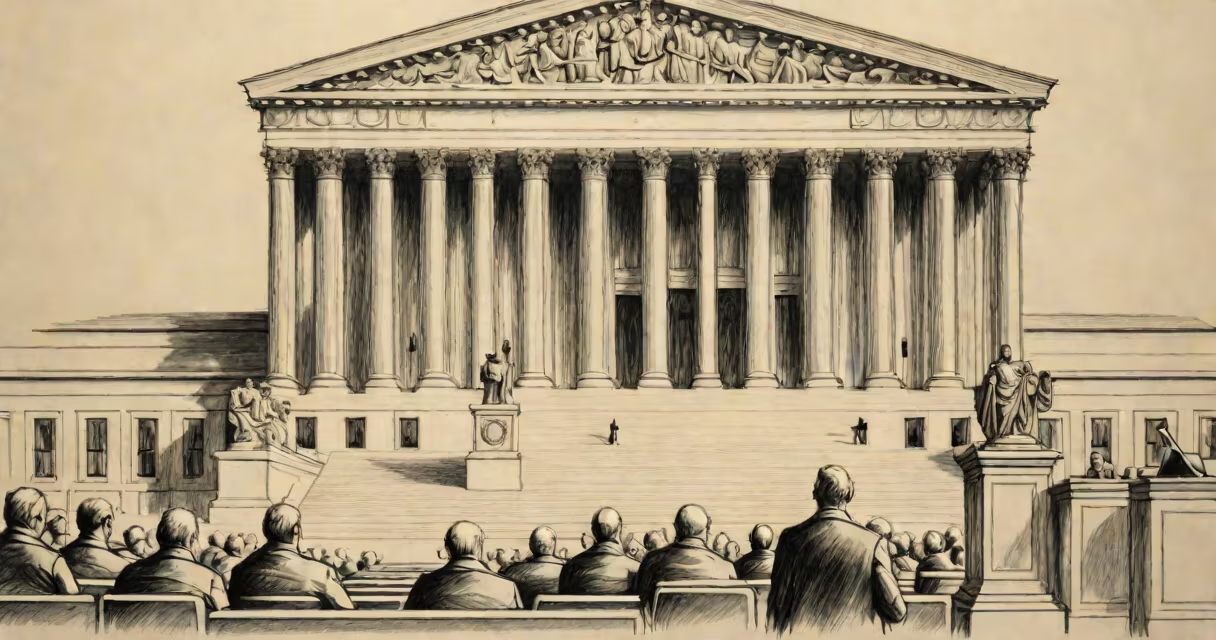
Cases related to the First Amendment challenge and define the limits of free speech, press, religion, and assembly in the United States. These legal battles establish precedents that shape constitutional interpretation.
First Amendment cases typically begin when individuals or groups believe their rights have been violated. They file lawsuits challenging laws, policies, or actions they claim infringe upon their constitutional freedoms. Courts then interpret whether the government's actions violate the First Amendment's protections.
For example, in New York Times Co. v. Sullivan (1964), the Supreme Court ruled that public officials could not sue for libel without proving actual malice. This case set a high bar for defamation lawsuits against media outlets, protecting journalists and strengthening freedom of the press.
First Amendment cases generally fall into five categories:
First Amendment cases emerge at all levels of government-local, state, and federal. They often arise when laws conflict with individual liberties. For instance, Engel v. Vitale (1962) originated in a New York school district requiring students to recite a prayer. The Supreme Court ruled that state-sponsored prayer in public schools violated the Establishment Clause.
Another key area is campus free speech. In Hazelwood School District v. Kuhlmeier (1988), the Court balanced student expression rights against school authority, allowing schools to censor student newspapers under certain conditions.
Many people assume the First Amendment protects all speech equally. However, the Court has carved out exceptions, such as obscenity, incitement to violence, and defamation. Another misconception is that the First Amendment applies only to government actions. In reality, it restricts government interference but doesn't apply to private entities unless they act as government agents.
For example, private businesses can restrict speech on their property, as seen in PruneYard Shopping Center v. Robins (1979), where the Court ruled that private property owners could limit free speech activities.
In 1965, students wore black armbands to protest the Vietnam War, violating school policy. They were suspended, leading to Tinker v. Des Moines Independent Community School District (1969). The Supreme Court ruled that students' free speech rights extended to schools unless their actions disrupted the learning environment.
This case remains a key part of student free speech rights. It established that schools cannot suppress expression simply because they disagree with the message. As the Court stated, "Students don't shed their constitutional rights at the schoolhouse gate."
Cases related to the First Amendment continue to evolve, shaping how Americans exercise their fundamental rights. From free speech to religious liberty, these legal battles ensure the Constitution adapts to new challenges while protecting core freedoms. For deeper insights, explore key protections and landmark rulings.