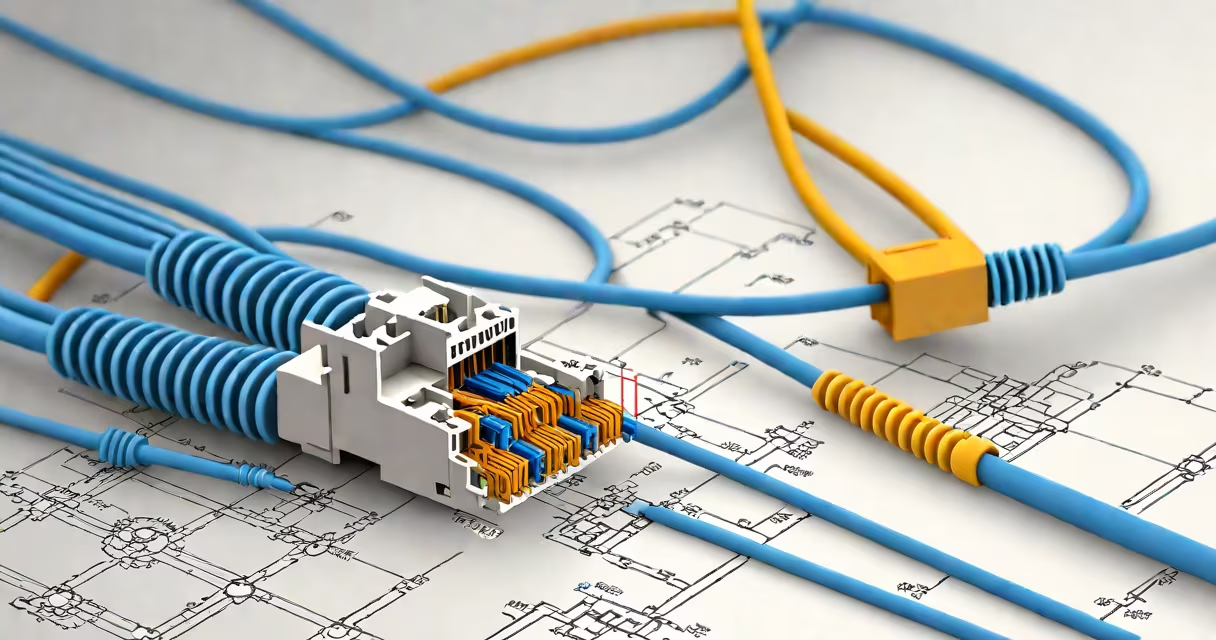
A cat5e UTP ethernet cable is a twisted pair networking cable that supports gigabit speeds (1,000 Mbps) for wired internet connections. It uses unshielded twisted pair (UTP) wiring to reduce interference.
Cat5e UTP cables consist of four pairs of copper wires twisted together. The twisting pattern reduces crosstalk, where signals interfere with each other. Each pair is insulated with a different twist rate to further minimize interference.
Cat5e UTP cables come in two primary variants:
Cat5e UTP cables are widely used in home and office networks. They connect computers, routers, and switches to provide stable, high-speed internet access. The UTP design makes them cost-effective and easy to install compared to shielded cables.
One common misconception is that cat5e cables are outdated. While cat6 and cat6a cables offer higher performance, cat5e remains sufficient for most home and small business applications. According to the Telecommunications Industry Association, cat5e cables support up to 1,000 Mbps at 100 MHz.
| Cable Type | Max Speed | Frequency | Typical Use |
|---|---|---|---|
| Cat5e | 1,000 Mbps | 100 MHz | Home networks, small offices |
| Cat6 | 10,000 Mbps | 250 MHz | Business networks, data centers |
| Cat6a | 10,000 Mbps | 500 MHz | High-performance networks |
Cat5e cables are often confused with cat5 cables. However, cat5e cables have improved specifications, including better performance and reduced crosstalk. The "e" stands for "enhanced," indicating their superior quality compared to standard cat5 cables.
When setting up a home office network, I used a cat5e UTP cable to connect my router to a desktop computer. The installation was straightforward, and the cable provided stable, high-speed internet access without any issues. For most home users, cat5e cables offer more than enough bandwidth for daily activities like streaming, gaming, and video conferencing.