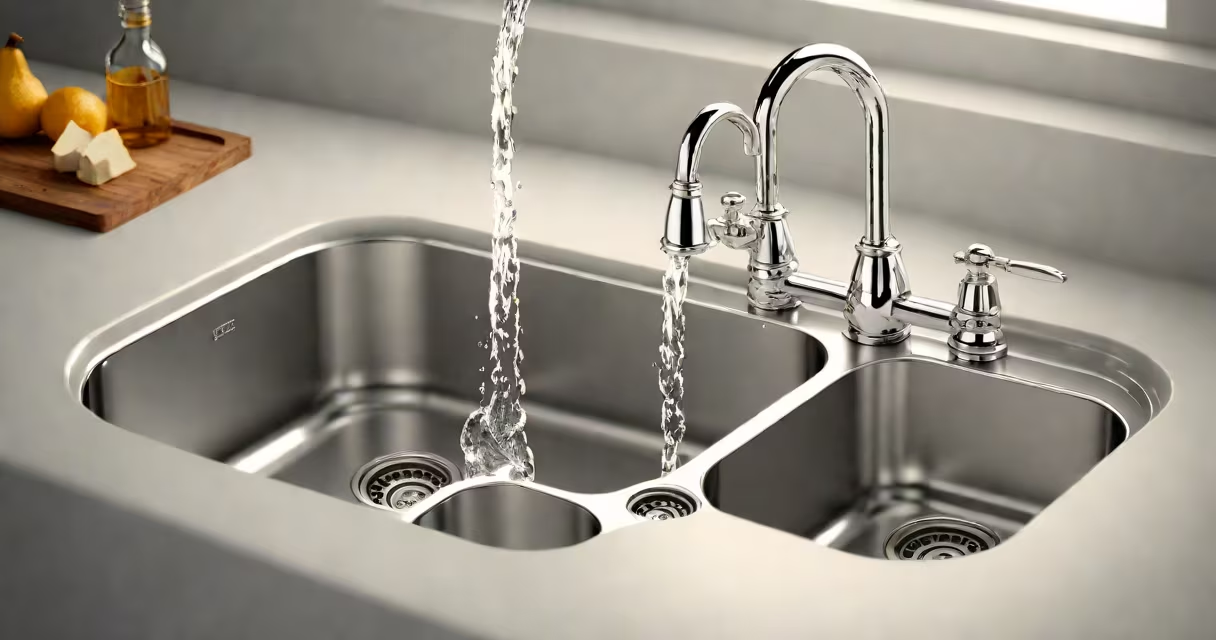
A clog in kitchen sink pipe occurs when food particles, grease, or other debris accumulate and block water flow. This common plumbing issue slows drainage or stops it entirely.
Kitchen sinks typically have two drains connected to a U-shaped pipe called a P-trap, which holds water to prevent sewer gases from entering your home. When debris builds up in the P-trap or further down the pipe, water can't pass through, causing a clog.
| Type | Cause | Solution |
|---|---|---|
| Grease Clog | Cooking oils and fats solidify in pipes | Pour boiling water or use a drain cleaner |
| Food Particle Clog | Scraps accumulate in the P-trap | Remove the P-trap and clean it out |
| Foreign Object Clog | Items like sponges or utensils fall in | Use pliers or a drain snake to retrieve the object |
Many people assume clogs only happen due to food waste. However, grease is a leading cause, as it coats pipes and traps other debris. Another mistake is using chemical drain cleaners too often, which can damage pipes over time.
To avoid clogs, always use a sink strainer to catch food particles. Pour cooking grease into a container, not the sink. Regularly flush the drain with hot water to clear minor buildup. For deeper cleaning, clean your kitchen sink drain every few months.
If clogs persist after trying DIY methods, the issue may be deeper in the plumbing system. A professional plumber can use specialized tools like hydro-jetting to clear stubborn blockages. If you notice slow drainage or foul odors frequently, it's time to call for help.
I once dealt with a stubborn clog caused by a mix of grease and coffee grounds. After removing the P-trap and cleaning it thoroughly, the sink drained perfectly. Regular maintenance since then has prevented recurrence.