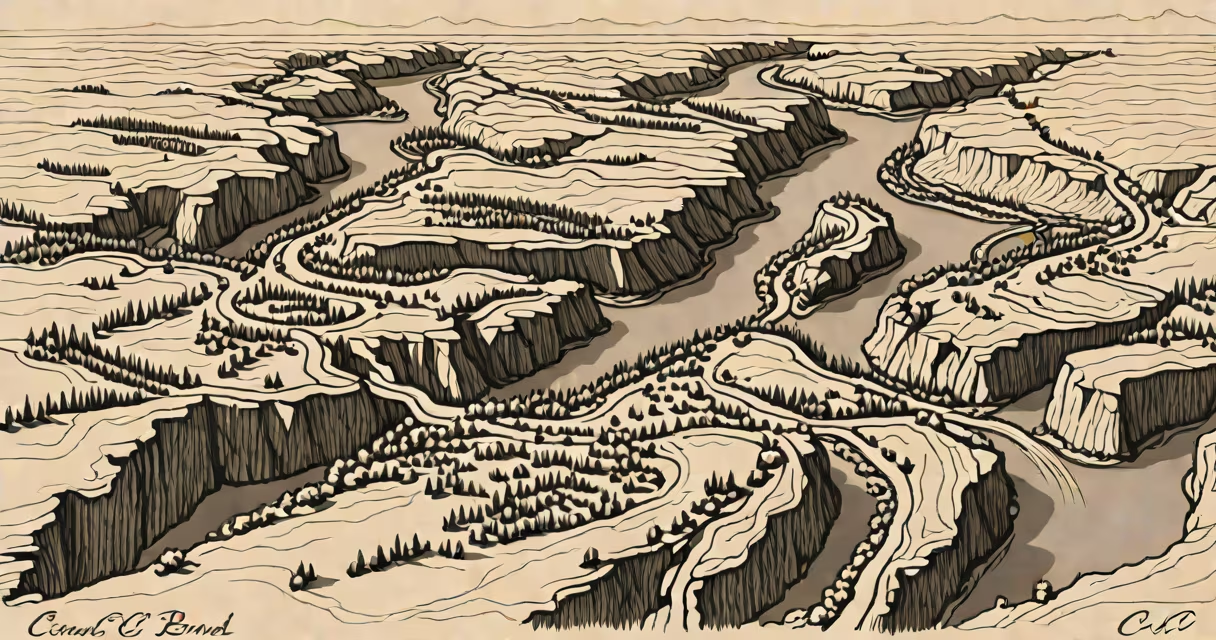
Cocc Bend Oregon is a remote and rugged field along the John Day River in eastern Oregon, known for its dramatic rock formations and isolation.
The bend formed approximately 6 million years ago through erosion and tectonic activity. The John Day River cut through layers of basalt, creating steep cliffs and unique geological features.
Cocc Bend spans about 3 miles along the river, with elevations ranging from 2,800 to 3,200 feet. The area's distinctive horseshoe shape gives it its name.
Cocc Bend's most striking feature is its exposed basalt columns, some standing over 200 feet tall. These formations create a natural amphitheater along the riverbank.
The bend also includes:
Cocc Bend lies within public land managed by the Bureau of Land Management. A dirt road provides access from nearby U.S. Route 26.
Visitors should prepare for rough terrain and limited services. The area receives fewer than 500 visitors annually, making it one of Oregon's most secluded natural attractions.
Another common mistake is assuming the area has established trails. While hiking is possible, most visitors explore on foot without marked paths.
The Bureau of Land Management protects Cocc Bend as part of the larger John Day River Recreation Area. Volunteers help monitor the site for vandalism and erosion.
In 2018, a conservation group planted 500 native shrubs to stabilize eroded areas. These efforts help maintain the bend's fragile system.
During a visit in September 2022, I arrived at sunrise to avoid afternoon heat. The basalt columns cast long shadows across the river, creating striking patterns on the water's surface. I spotted a family of mule deer drinking near the shore, completely undisturbed by my presence.