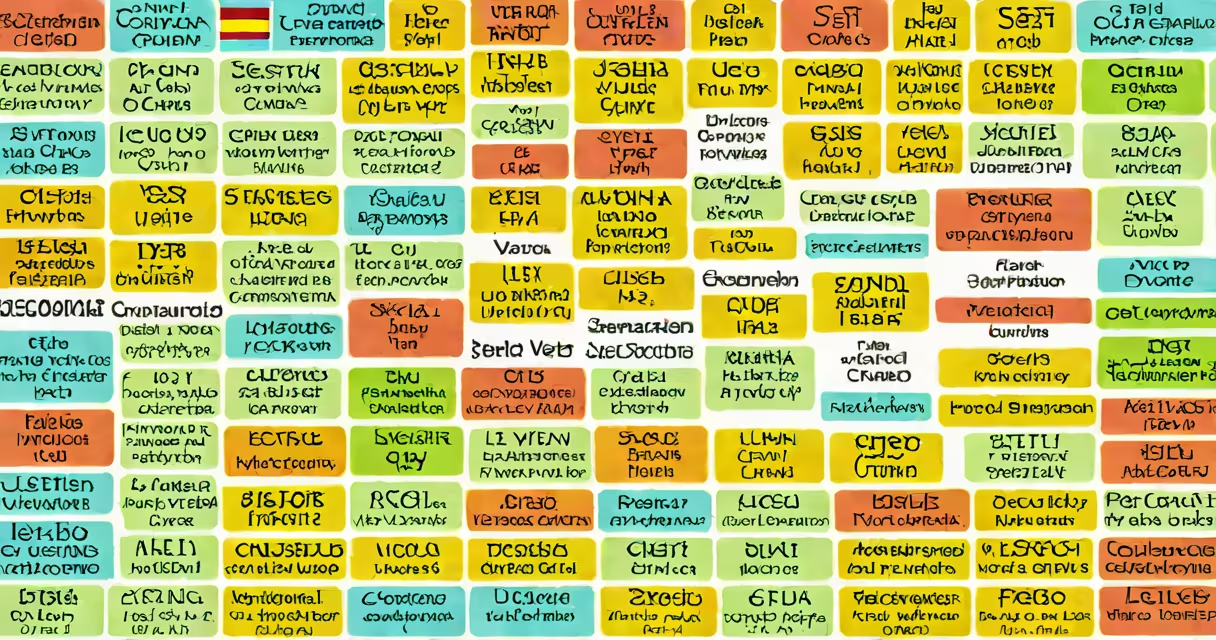
A conjugating Spanish verbs chart displays verb endings for different subjects and tenses. These charts organize verbs by their infinitive endings (-ar, -er, -ir) and show how they change based on who performs the action.
Spanish verb conjugations follow predictable patterns. Most verbs fall into three categories based on their infinitive endings:
For example, the -ar verb "hablar" (to speak) becomes "hablo" (I speak), "hablas" (you speak), and "habla" (he/she speaks).
| Chart Type | Example Verb | Key Feature |
|---|---|---|
| Regular -AR Verbs | Hablar | Consistent vowel changes |
| Regular -ER Verbs | Comer | Consistent vowel changes |
| Regular -IR Verbs | Vivir | Consistent vowel changes |
| Irregular Verbs | Ser, Ir, Dar | Unique stem changes |
| Reflexive Verbs | Lavarse | Requires reflexive pronouns |
Most charts include common tenses like present, preterite, imperfect, future, and conditional. Some advanced charts cover subjunctive and command forms.
Charts help learners visualize patterns and exceptions. They're particularly useful for mastering irregular verbs, which don't follow standard patterns. For instance, the verb "tener" (to have) becomes "tengo" (I have), breaking from the typical -er pattern.
Many learners confuse regular and irregular verbs. While most -ar, -er, and -ir verbs follow predictable patterns, some common verbs like "ser" (to be) and "ir" (to go) have unique forms that don't fit these patterns.
Another mistake is assuming all reflexive verbs follow the same pattern. Some, like "acordarse" (to remember), require specific pronoun placements that differ from standard reflexive constructions.