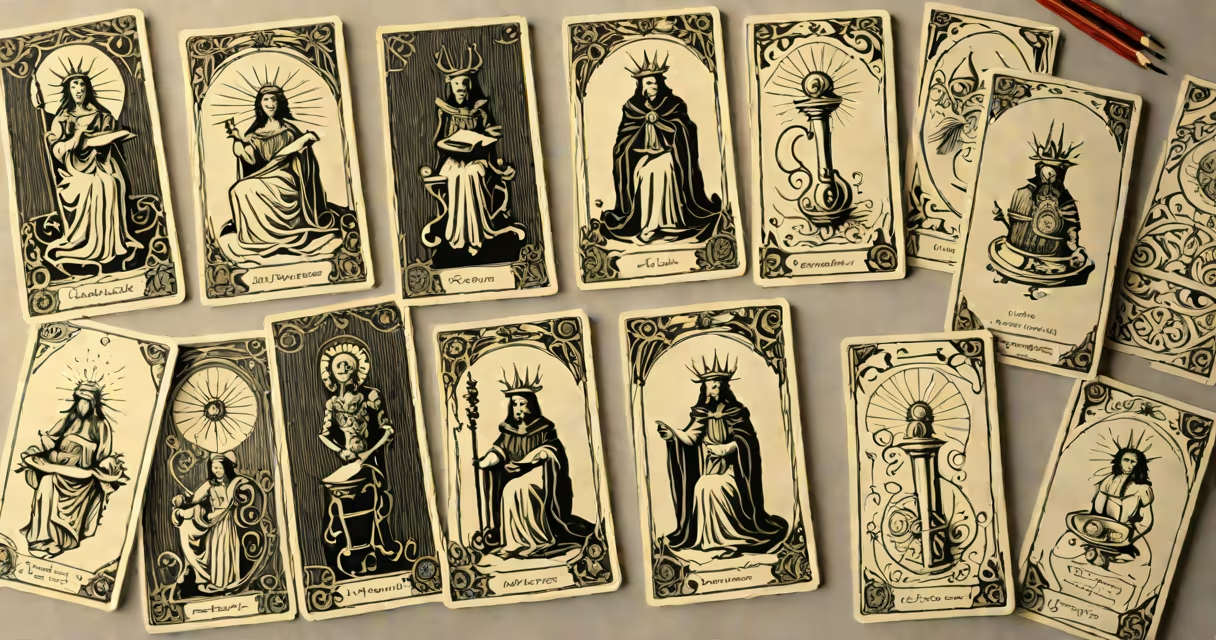
A cuestionario de ol is a Spanish-language tarot questionnaire that asks specific questions about love, relationships, or personal growth, then interprets the drawn cards as answers. This practice combines structured inquiry with intuitive card reading.
The process begins with a set of predefined questions, often focused on emotional or spiritual guidance. The querent (person asking the question) draws cards in response to each prompt. A typical spread might involve pulling three cards: one for the past, one for the present, and one for the future regarding the topic in question.
For example, a question like "¿Qué obstáculos enfrento en mi relación?" (What obstacles do I face in my relationship?) might yield cards that symbolize communication issues, unresolved conflicts, or external influences. The reader then interprets these symbols in the question.
These questionnaires vary by focus and structure. Common types include:
Some practitioners use standardized questionnaires, while others allow the querent to formulate their own questions. The flexibility makes this tool adaptable to various needs.
Many people confuse cuestionario de ol with generic tarot readings or cuestionario de ba. Unlike free-form readings, this method relies on structured questions to guide the interpretation. It's also distinct from five of cups readings, which focus on loss and regret without the structured questioning component.
Another misconception is that the cards provide definitive answers. Instead, they offer symbolic guidance that the querent must interpret within their own context. The cards act as mirrors, reflecting subconscious thoughts or external influences rather than providing clear-cut solutions.
People turn to this method for clarity during uncertain times. The structured format helps focus the mind, reducing anxiety around ambiguous situations. For example, someone struggling with a career decision might use the questionnaire to explore their fears, strengths, and potential outcomes.
Therapists and spiritual advisors sometimes incorporate this tool into sessions. It serves as a conversational catalyst, helping clients articulate their concerns and uncover hidden emotions. The visual nature of the cards can make abstract concepts more tangible.
Last year, I used a cuestionario de ol to address a creative block. My questions centered on overcoming self-doubt and finding inspiration. The cards revealed themes of stagnation and the need for new experiences. Acting on this insight, I took a short trip, which reignited my creativity. The structured approach kept me from spiraling into overanalysis.
This experience reinforced the tool's value-not as a fortune-telling device, but as a structure for self-reflection and actionable insights.