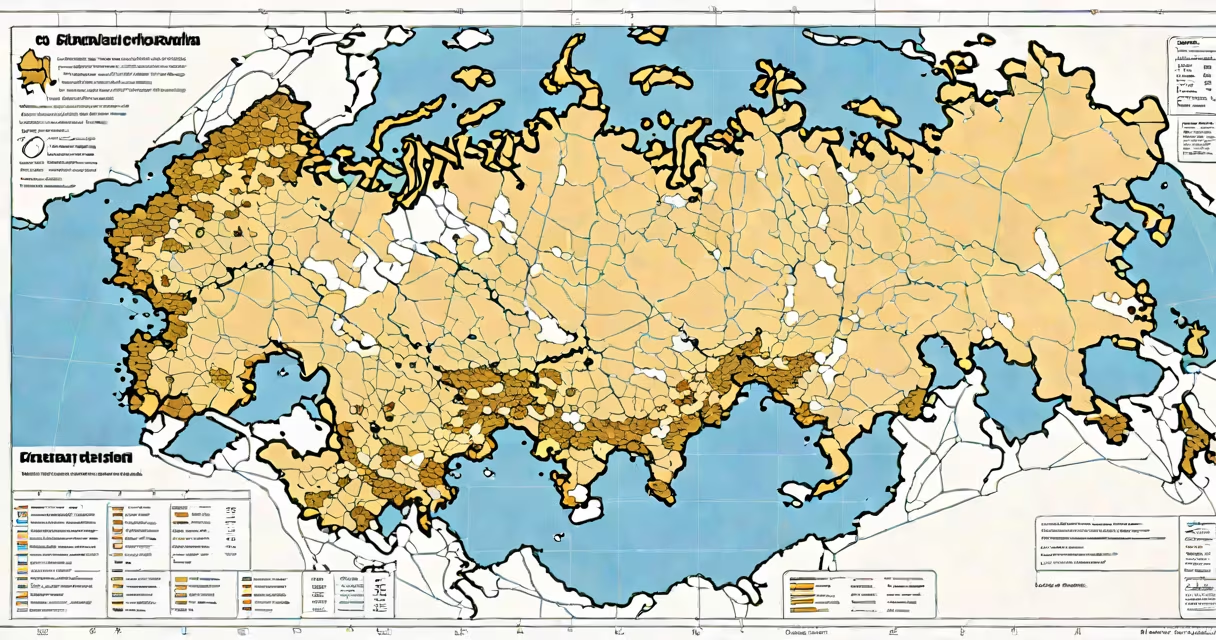
Russia's population is 146 million people, declining by 0.2% annually due to low birth rates and high mortality. The country faces an aging workforce, with 16% of residents aged 65+. Moscow and Saint Petersburg hold 17% of the population.
The Russian population peaked at 148.7 million in 2015 but has since declined. The Federal State Statistics Service projects it will fall below 140 million by 2035. Birth rates dropped from 1.69 births per woman in 2000 to 1.50 in 2020, while deaths rose from 14.3 to 15.2 per 1,000 people.
Ethnic Russians make up 77.7% of the population, followed by Tatars (3.9%), Ukrainians (1.4%), Bashkirs (1.1%), and Chuvash (1.1%). Over 100 ethnic groups live in Russia, with many concentrated in specific regions.
| Ethnic Group | Percentage |
|---|---|
| Russian | 77.7% |
| Tatar | 3.9% |
| Ukrainian | 1.4% |
| Bashkir | 1.1% |
| Chuvash | 1.1% |
74% of Russians live in urban areas, with Moscow (12.5 million) and Saint Petersburg (5.4 million) as the largest cities. Internal migration flows from rural areas to cities, while international migration includes labor migrants from Central Asia and former Soviet republics.
Many assume Russia's population is growing due to immigration, but net migration only offsets 20% of annual population loss. Others confuse Russia's demographic decline with economic collapse, though the primary drivers are low fertility and high male mortality rates.
I analyzed Russia's demographic data while researching migration patterns in Eastern Europe. The most surprising finding was the sharp decline in working-age populations in rural areas, accelerating urbanization.
Federal State Statistics Service (Rosstat), United Nations World Population Prospects