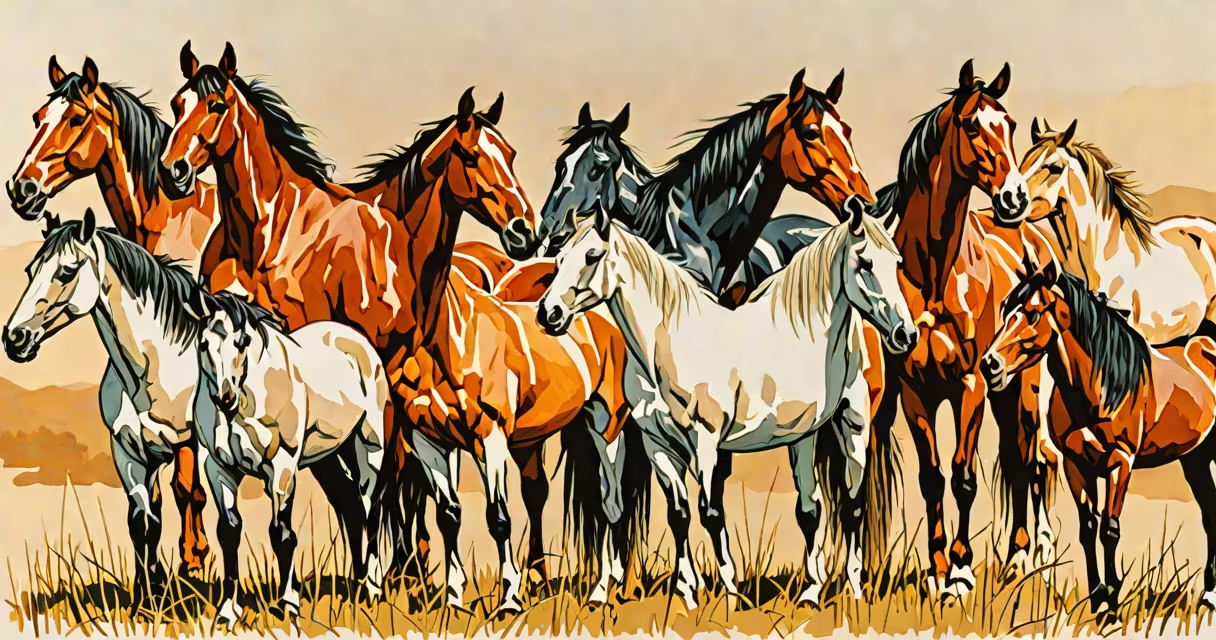
Horses have many names based on their breed, color, gender, and role. These terms help distinguish between the estimated 400 breeds worldwide, each with unique traits.
Horse breeds often have distinct names reflecting their origins or characteristics. For example:
Horses come in various colors, each with its own terminology. Common horse colors include:
| Color Name | Description |
|---|---|
| Bay | Reddish-brown body with black mane, tail, and lower legs. |
| Chestnut | Reddish coat with the same or lighter mane and tail. |
| Black | Completely black coat, though some may have a brownish tint. |
| Gray | Born with dark coats that lighten to gray or white as they age. |
The gender of a horse also affects its name. Here are the most common terms:
These terms are essential for understanding horse lineage and pedigree.
Horses are often named based on their roles or jobs. For example:
Many people confuse certain terms, such as "palomino" and "buckskin." While both are cream-colored, palominos have a golden coat with a white mane and tail, whereas buckskins have a tan body with black mane, tail, and lower legs.
Another common mistake is assuming all gray horses turn completely white. In reality, most grays develop a dappled pattern as they age, but not all turn pure white.
When I visited a local stable, I noticed how the staff referred to each horse by its specific breed and color. For instance, they called a chestnut mare "Lucy" and a gray stallion "Max." This precise language helped them manage the horses effectively and communicate with visitors.