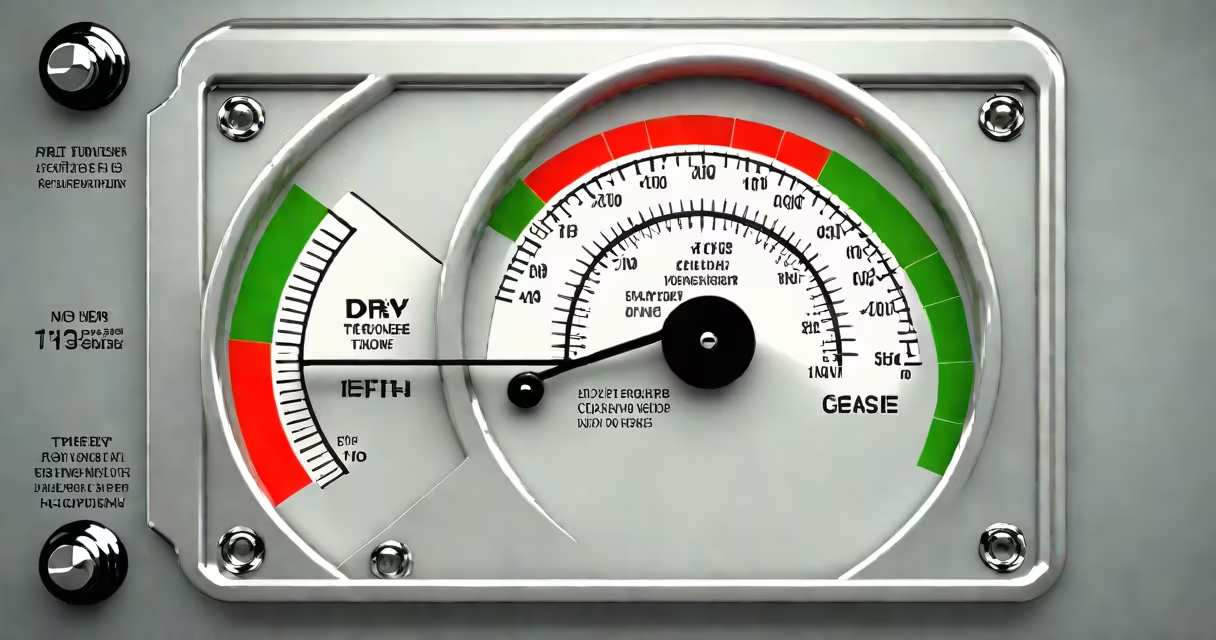
A dry film thickness gauge measures the thickness of coatings like paint, powder, or varnish applied to metal, plastic, or wood surfaces. These handheld devices ensure quality control by verifying coatings meet specifications.
Most gauges use magnetic induction or eddy current principles. Magnetic induction gauges work on ferrous metals (like steel), while eddy current gauges measure non-ferrous materials (like aluminum) or coatings on ferrous substrates. The gauge sends a signal through the coating, and the response indicates thickness.
| Type | Measurement Principle | Best For |
|---|---|---|
| Magnetic Induction | Electromagnetic field disruption | Ferrous metals (steel, iron) |
| Eddy Current | Electrical current in conductive materials | Non-ferrous metals (aluminum, copper) or coatings on ferrous metals |
| Ultrasonic | Sound wave reflection | Non-metallic surfaces (plastic, wood, concrete) |
Manufacturers use dry film thickness gauges in automotive, aerospace, construction, and industrial coating applications. Proper coating thickness ensures durability, corrosion resistance, and compliance with industry standards like ISO 2808 or ASTM D1186.
For instance, automotive manufacturers check paint thickness to prevent premature wear or environmental damage. A common misconception is that thicker coatings are always better-excessive thickness can lead to cracking or peeling.
Some assume all gauges work on any surface. However, magnetic induction gauges only work on ferrous metals, while eddy current gauges handle non-ferrous materials. Ultrasonic gauges are needed for non-metals.
Another mistake is confusing wet film thickness (measured during application) with dry film thickness (measured after curing). Wet film measurements must account for drying and curing processes to convert to dry film thickness.
During a project inspecting industrial storage tanks, I used a magnetic induction dry film thickness gauge to verify epoxy coatings on steel surfaces. Measurements confirmed the coating met the required 3 mils (76 micrometers) for corrosion protection, ensuring compliance with safety regulations.
Without accurate measurements, the coating might have been too thin, risking rust and structural failure. This highlights the importance of precise coating thickness control in critical applications.