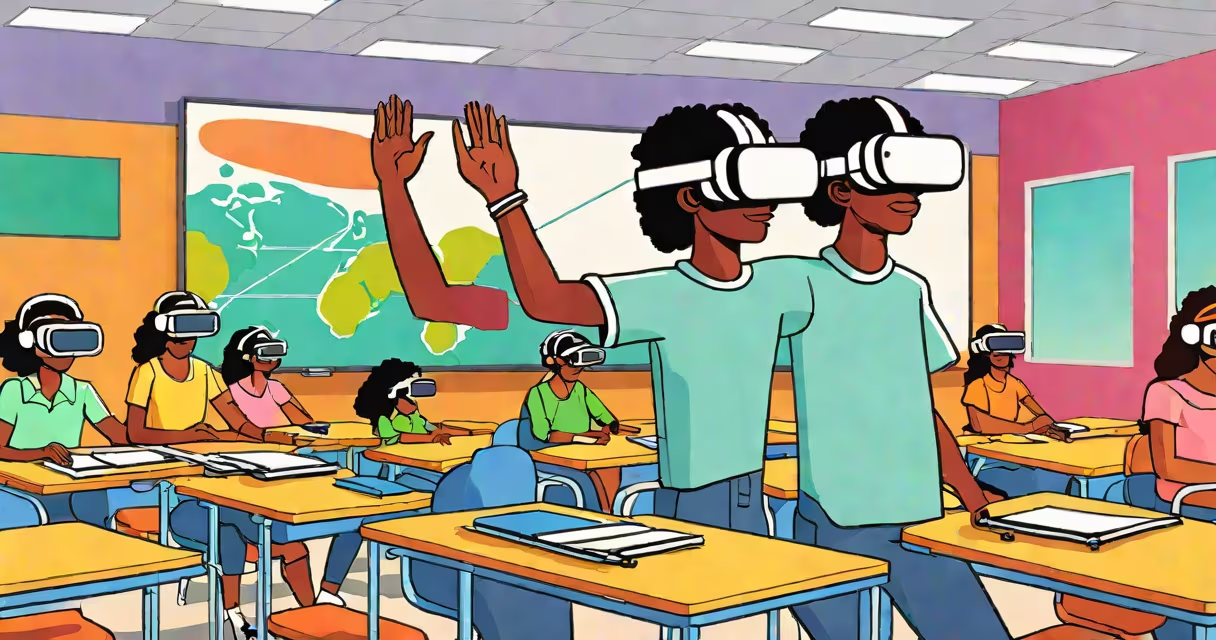
Education technology trends refer to emerging innovations in digital tools and platforms designed to improve teaching, learning, and administrative efficiency in educational settings. These trends use advancements like artificial intelligence, virtual reality, and data analytics to create more personalized, accessible, and engaging learning experiences.
Edtech trends integrate new technologies into existing educational frameworks to solve specific challenges. For example, AI-driven platforms analyze student performance data to tailor lesson plans, while VR creates immersive environments for hands-on learning. These tools often connect to school management systems, enabling real-time tracking of attendance, grades, and student progress.
| Trend | Description | Example |
|---|---|---|
| Artificial Intelligence | AI personalizes learning by adapting to individual student needs and automating administrative tasks. | Carnegie Learning's MATHia uses AI to adjust problem difficulty based on student responses. |
| Virtual Reality | VR provides immersive simulations for subjects like science and history, allowing students to explore environments they couldn't access otherwise. | Google Expeditions offers VR field trips to historical sites and natural wonders. |
| Adaptive Learning Platforms | These platforms adjust content delivery based on student performance, ensuring each learner receives appropriate support. | Knewton's adaptive learning system customizes math and reading lessons for K-12 students. |
| Learning Analytics | Data analytics tools track student engagement and performance, helping educators identify areas for improvement. | Brightspace by D2L uses analytics to monitor student progress and suggest interventions. |
Schools worldwide adopt these technologies to improve outcomes, reduce costs, and increase accessibility. For instance, AI tutors help students in remote areas access high-quality education, while VR labs allow universities to offer hands-on training without expensive equipment. According to a HolonIQ report, global edtech investments reached $16.1 billion in 2020, reflecting growing demand.
One common misconception is that education technology trends replace teachers. In reality, these tools supplement instruction by handling repetitive tasks, freeing educators to focus on mentorship and creative teaching methods. For example, at my former school, we used an AI grading tool to handle multiple-choice exams, saving teachers 10 hours per week for one-on-one student interactions.
Beyond current applications, trends like blockchain for credentialing and neurofeedback for focus training are gaining traction. Blockchain could secure academic records, preventing fraud, while neurofeedback tools might help students with ADHD improve concentration. A World Economic Forum study predicts these innovations will change education by 2030, emphasizing lifelong learning and adaptability.