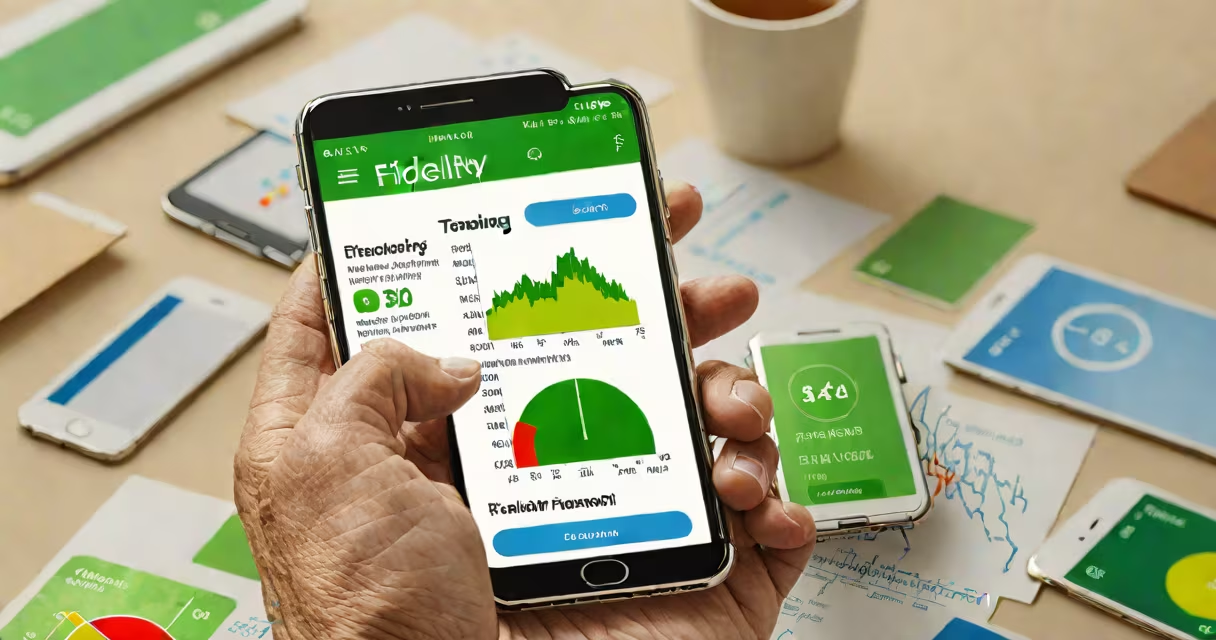
Fidelity fractional trading lets investors buy portions of stocks and ETFs, making high-priced assets accessible with any dollar amount. This feature allows purchasing fractions of shares rather than whole ones, enabling investments in expensive stocks with smaller budgets.
Instead of requiring investors to purchase whole shares, fractional trading divides stocks into smaller units. For example, if a single share of a company costs $1,000, an investor could buy half a share for $500. Fidelity's platform processes these transactions similarly to whole-share trades, adjusting the number of shares owned based on the investment amount.
Fidelity offers fractional trading for both stocks and exchange-traded funds (ETFs). While not all assets are available for fractional purchases, popular and liquid securities are typically included. The minimum investment amount varies by stock but is often as low as $1.
| Asset Type | Minimum Investment | Availability |
|---|---|---|
| Stocks | $1 | Popular and liquid stocks |
| ETFs | $1 | Most major ETFs |
Fractional trading democratizes access to expensive stocks. Without it, investors might avoid high-priced shares due to budget constraints. For example, an investor with $100 couldn't buy a $500 stock, but fractional trading allows them to own 20% of that share. This feature also enables dollar-cost averaging strategies across multiple stocks.
Some investors confuse fractional shares with partial ownership or limited benefits. However, fractional shares confer the same rights as whole shares, including voting rights and dividend payments proportional to the ownership stake. Fidelity's platform handles these automatically, ensuring investors receive their fair share of corporate actions.
Another misconception is that fractional trading is only for small investments. While it's useful for modest budgets, investors can also use it to fine-tune their portfolios by adding small amounts to existing positions in expensive stocks. For instance, an investor might own one share of a $1,000 stock and add $50 worth of fractional shares to increase their position incrementally.
To begin using fractional trading on Fidelity's platform, investors simply select the "Dollar Amount" option when placing a trade order. They then enter the desired investment amount, and Fidelity calculates the corresponding fractional shares. The process is smooth and integrates with existing trading tools and research resources.
I tested this feature by purchasing a fractional share of a high-priced tech stock. The interface displayed my ownership as a decimal value, and subsequent trades adjusted my position accordingly. Dividends were credited proportionally, confirming the functionality matched whole-share investments.
While fractional trading offers flexibility, investors should still research stocks thoroughly before investing. Just because a high-priced stock is accessible through fractional shares doesn't mean it's a good investment. Diversification remains important, and fractional trading can help achieve this by spreading investments across multiple stocks with smaller amounts.
According to Fidelity's research, fractional shares can help investors build more diversified portfolios with smaller amounts of capital. This aligns with modern portfolio theory, which emphasizes diversification to manage risk. By allowing investments in expensive stocks that might otherwise be out of reach, fractional trading supports this strategy.