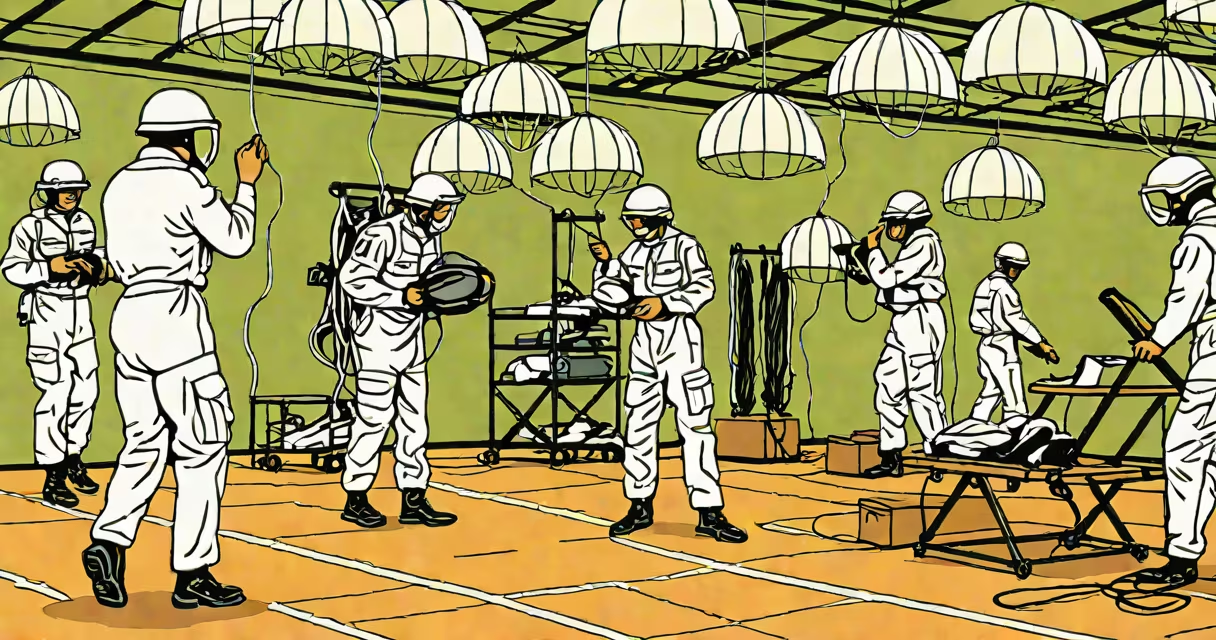
Fort Benning Airborne School trains soldiers to jump safely from aircraft using parachutes. Graduates earn the coveted "wings" insignia.
The course lasts three weeks. Soldiers learn static-line jumps from planes at 1,250 feet. They complete five jumps, including one at night. The first jump is the most critical: trainees must exit the plane, deploy their parachute, and land safely within a marked drop zone.
| Jump Type | Altitude | Purpose |
|---|---|---|
| Static-line jump | 1,250 feet | Parachute deploys automatically upon exiting the aircraft |
| Freefall jump | 3,000 feet | Trainees deploy their own parachutes after freefalling |
| Night jump | 1,250 feet | Tests skills under low-visibility conditions |
Airborne units deploy quickly by air. Paratroopers insert behind enemy lines to disrupt operations. The 82nd Airborne Division at Fort Bragg uses these skills for rapid global response.
Airborne training is not just about jumping. It builds mental toughness, teamwork, and adaptability. Soldiers learn to operate in austere environments with limited support.
Many assume Airborne School is only for elite soldiers. In reality, it's open to all U.S. military personnel who meet physical and medical requirements. The school focuses on safety and repetition rather than extreme risk-taking.
Another myth is that trainees jump from extreme heights. Most jumps occur between 800 and 1,500 feet, ensuring enough time for parachute deployment and landing.
During my visit to Fort Benning, I watched soldiers practice jumps. The controlled chaos of the drop zone-parachutes billowing, trainees landing in formation-was impressive. One soldier told me, "The first jump is terrifying, but the adrenaline makes it addictive."