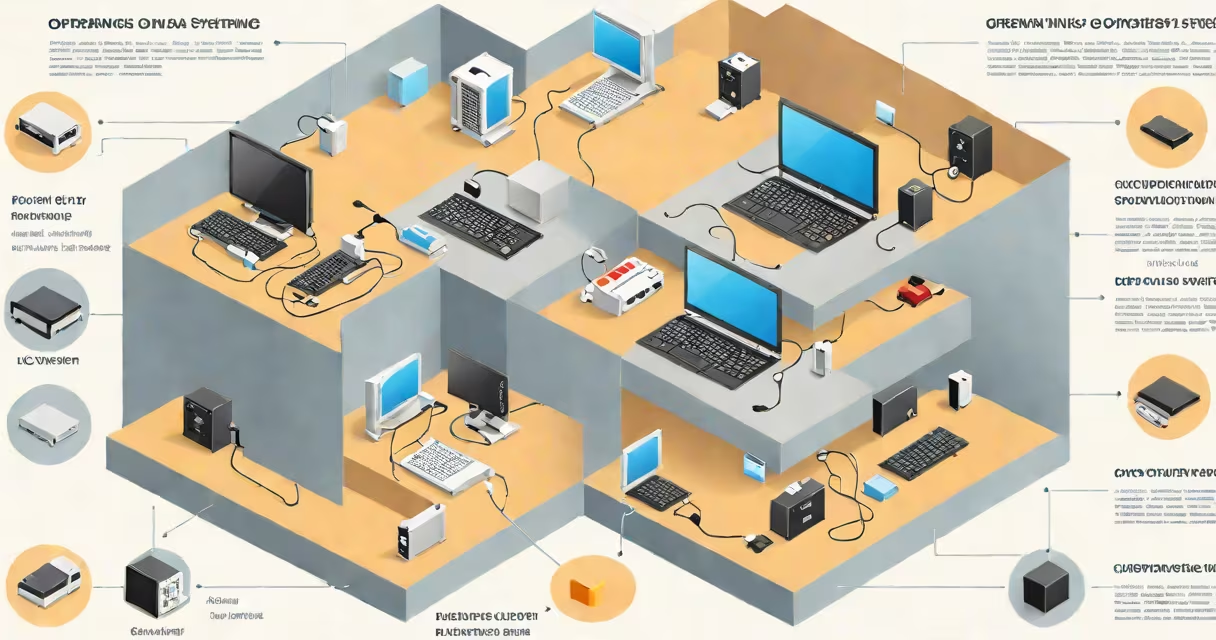
The function of an operating system is to manage hardware resources and provide services for computer programs. It acts as an intermediary between users and the computer hardware, handling basic tasks like memory allocation, file management, and process scheduling.
An operating system performs several critical functions:
| Type | Description | Examples |
|---|---|---|
| Batch Operating Systems | Execute jobs in batches without user interaction | Early IBM mainframe systems |
| Time-Sharing Operating Systems | Allow multiple users to use the system simultaneously | Unix, Linux |
| Distributed Operating Systems | Manage a group of distinct computers as a single computer | Apache Hadoop, Microsoft Azure |
| Real-Time Operating Systems | Serve real-time applications that process data as it comes in | Embedded systems, industrial control systems |
Many people confuse the operating system with application software. While applications like web browsers or word processors run on top of the OS, the OS itself provides the platform for these applications to operate. Another common mistake is thinking that the OS is only for desktop computers. In reality, operating systems exist for many devices, systems in cars.
One of the most critical functions of an operating system is the booting process. When you turn on your computer, the OS loads itself into memory and takes control of the system. This process involves initializing hardware, loading device drivers, and starting system services. For a detailed explanation, see our guide on booting an operating system.
Without an operating system, a computer would be useless. The hardware components wouldn't know how to communicate with each other, and you wouldn't be able to run any applications. For more details, check out our article on what happens to a computer without an operating system.
The function of an operating system is to provide a stable, user-friendly platform for running applications and managing hardware resources. From managing processes to providing a user interface, the OS is important for the functioning of any computer system.