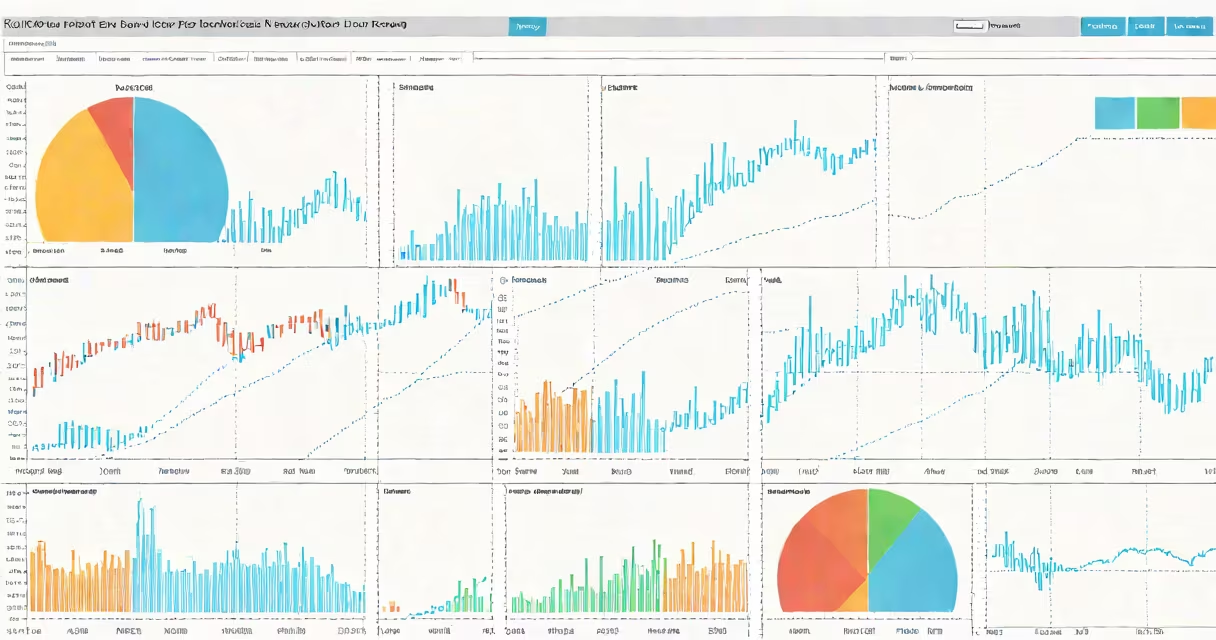
Good performing stocks are equities that consistently deliver returns exceeding their industry benchmarks through strong fundamentals, growth potential, and market leadership. These stocks typically exhibit upward price trends, solid financial health, and positive investor sentiment.
Good performing stocks generate returns through a combination of capital appreciation and dividend payments. Capital appreciation occurs when a stock's price increases over time, while dividends provide regular income to shareholders. Companies with strong earnings growth, competitive advantages, and effective management tend to produce good performing stocks.
Good performing stocks can be categorized based on their growth characteristics and market segments:
| Type | Description | Example |
|---|---|---|
| Growth Stocks | Companies reinvest profits to expand operations and increase market share | Amazon (AMZN) |
| Value Stocks | Undervalued companies with strong fundamentals trading below their intrinsic value | Berkshire Hathaway (BRK.A) |
| Dividend Stocks | Companies with a history of consistent dividend payments and growth | Johnson & Johnson (JNJ) |
| Momentum Stocks | Stocks experiencing upward price trends due to high trading volume and investor interest | Tesla (TSLA) |
Investors use good performing stocks to build diversified portfolios that outperform the broader market. These stocks are often found in sectors experiencing growth, such as technology, healthcare, and consumer discretionary. Investors seek good performing stocks to achieve long-term capital appreciation, generate passive income through dividends, and hedge against market volatility.
For example, during the tech boom of the late 1990s, investors who identified good performing stocks in the technology sector, such as Microsoft (MSFT) and Cisco (CSCO), experienced significant gains. Similarly, during the COVID-19 pandemic, good performing stocks in the healthcare and biotechnology sectors, such as Moderna (MRNA) and Pfizer (PFE), saw substantial increases in value.
To identify good performing stocks, investors analyze several key metrics and indicators. These include earnings per share (EPS), price-to-earnings ratio (P/E), return on equity (ROE), and debt-to-equity ratio., investors consider qualitative factors such as management effectiveness, competitive positioning, and industry trends.
For instance, a company with a high ROE, low debt-to-equity ratio, and strong management team may be a good performing stock. Investors also look for companies with a history of consistent earnings growth and positive cash flow. By analyzing these factors, investors can identify good performing stocks with strong potential for future growth.
When researching good metal stocks, investors might focus on companies with strong market positions, such as Freeport-McMoRan (FCX), which has shown resilience and growth in the metals and mining sector.