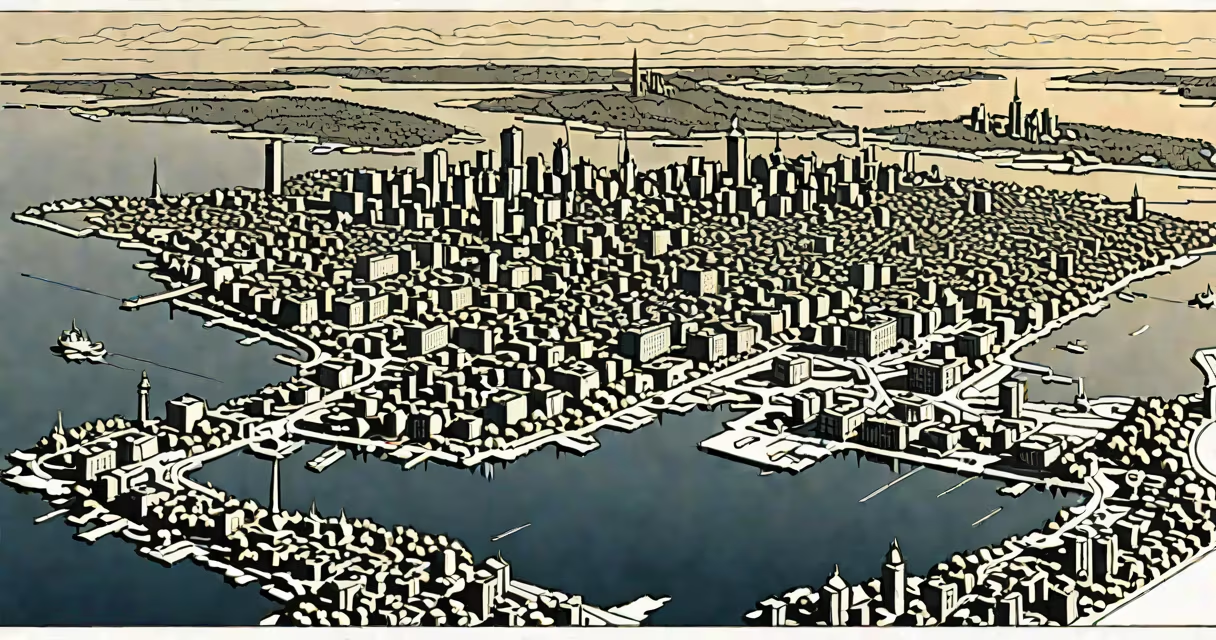
The Greater Stockholm Metropolitan Area is Sweden's largest urban region, encompassing Stockholm city proper plus 26 surrounding municipalities. It holds 25% of Sweden's population (over 2.4 million people) and generates 35% of the country's GDP.
The region spans 6,500 square kilometers (2,500 sq mi), including the city center, suburbs, and the Stockholm archipelago. The municipality of Stockholm is the core, surrounded by municipalities like Solna, Huddinge, and Nacka. The area extends 80 km (50 mi) north-to-south and 60 km (37 mi) east-to-west.
Unlike other European capitals, Greater Stockholm's growth is constrained by water. The Baltic Sea, Lake Mälaren, and thousands of islands limit outward expansion, creating a dense urban core. The region's highest point, Tomtberget, reaches only 107 meters (351 ft) above sea level.
The area consists of three layers:
Tourism contributes, with attractions like the Vasa Museum and ABBA The Museum drawing over 12 million visitors annually. The region's high quality of life, ranked #4 globally by the Economist Intelligence Unit (2023), attracts international talent.
The region relies on an integrated public transport system managed by SL (Storstockholms Lokaltrafik). Key components include:
| Mode | Key Lines | Daily Riders |
|---|---|---|
| Subway (Tunnelbana) | 3 lines, 100 stations | 1.1 million |
| Commuter Trains (Pendeltåg) | 7 lines, 57 stations | 400,000 |
| Ferries | 18 routes | 250,000 |
Car ownership is declining due to congestion charges introduced in 2006, reducing traffic by 20%. Cycling is popular, with 1,200 km (750 mi) of bike lanes.
The region faces housing shortages, with demand outstripping supply by 15,000 units annually. To address this, Stockholm plans to build 145,000 new homes by 2030, including sustainable developments like Hammarby Sjöstad.
Climate resilience is another focus. Rising sea levels threaten low-lying areas, prompting projects like elevated roads and flood barriers. The region aims for carbon neutrality by 2040, with initiatives like expanding district heating and renewable energy sources.
In 2023, I visited Stockholm during the summer solstice. The midnight sun created an ethereal glow over the city, highlighting its blend of historic charm and modern innovation. The region's ability to balance growth with sustainability sets a global example.