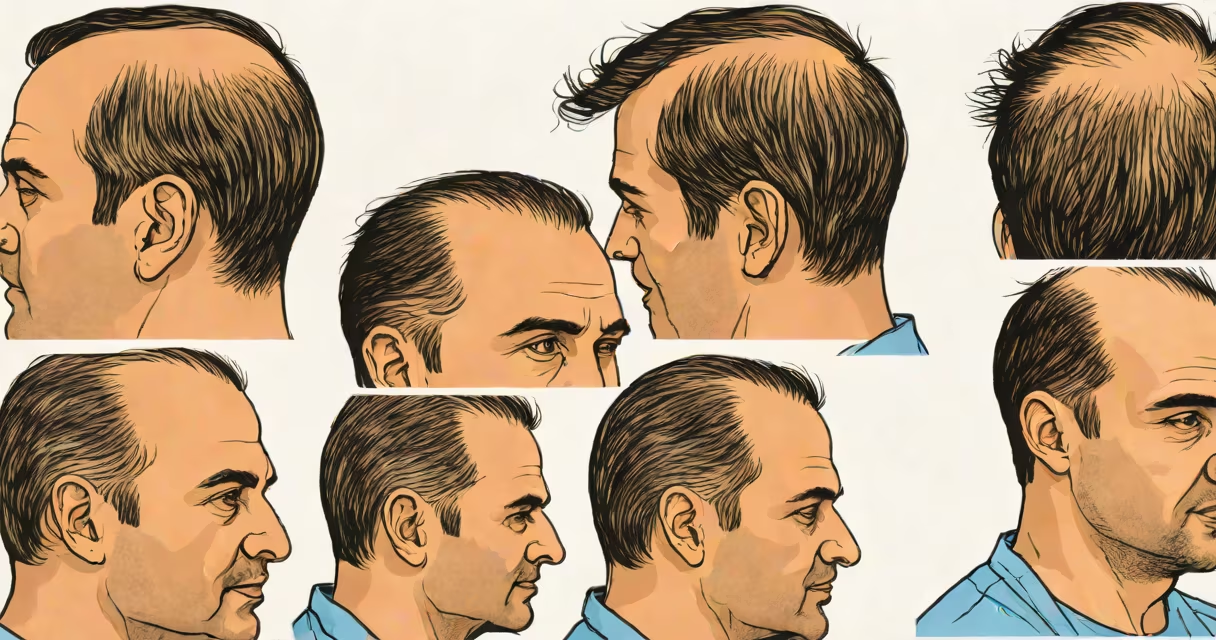
A hair transplant moves healthy follicles from dense areas to bald spots, creating permanent growth where hair was lost. Unlike natural regrowth, transplanted hair grows normally because it's genetically programmed to resist balding.
After a hair transplant, new hair follows the same growth cycle as natural hair: anagen (growth), catagen (transition), and telogen (resting). However, transplanted follicles retain their original characteristics from the donor area, which is typically resistant to balding hormones like DHT.
The initial shedding phase occurs 2-8 weeks post-surgery, where transplanted hairs fall out temporarily. This is normal-the follicles are resetting. Visible regrowth begins around 3-4 months, with full results visible after 12-18 months.
| Type | Procedure | Recovery Time |
|---|---|---|
| Follicular Unit Transplantation (FUT) | Strip method: A strip of scalp is removed, dissected into grafts, and implanted. | 2-4 weeks |
| Follicular Unit Extraction (FUE) | Individual follicles are extracted and transplanted one by one. | 7-10 days |
Transplants target areas affected by androgenetic alopecia (pattern baldness), trauma, or scarring. The procedure is most effective for men with male pattern baldness, as their donor hair (usually from the back/sides) is DHT-resistant. Women may also benefit, though results vary due to diffuse thinning.
Unlike medications like minoxidil or finasteride, which slow hair loss, transplants provide a permanent solution by replacing lost hair with genetically stable follicles. The American Association of Dermatology notes that over 600,000 procedures are performed annually in the U.S.
Many assume transplanted hair behaves like naturally regrowing hair. In reality, transplanted follicles are immune to balding, while naturally regrowing hair in balding areas often falls out again due to genetic sensitivity. For example, a patient with a family history of baldness may see transplanted hair thrive in the front hairline while native hair continues thinning elsewhere.
Another myth is that transplanted hair grows immediately. Post-surgery, patients experience a "shock loss" phase where transplanted hairs shed before regrowing. This temporary setback can last several months, leading some to mistake it for failure.
Consider a 45-year-old man with a receding hairline and thinning crown. A surgeon extracts 2,000 grafts from his donor area (back of the scalp) using FUE. After implantation, the patient experiences shedding at 6 weeks but notices new growth by month 4. By 12 months, the transplanted hair has filled in completely, while the crown remains thin unless additional treatments are applied.
For those considering a transplant, consulting a board-certified dermatologist is important. The International Society of Hair Restoration Surgery recommends choosing surgeons certified in both FUT and FUE techniques to ensure the best outcome.