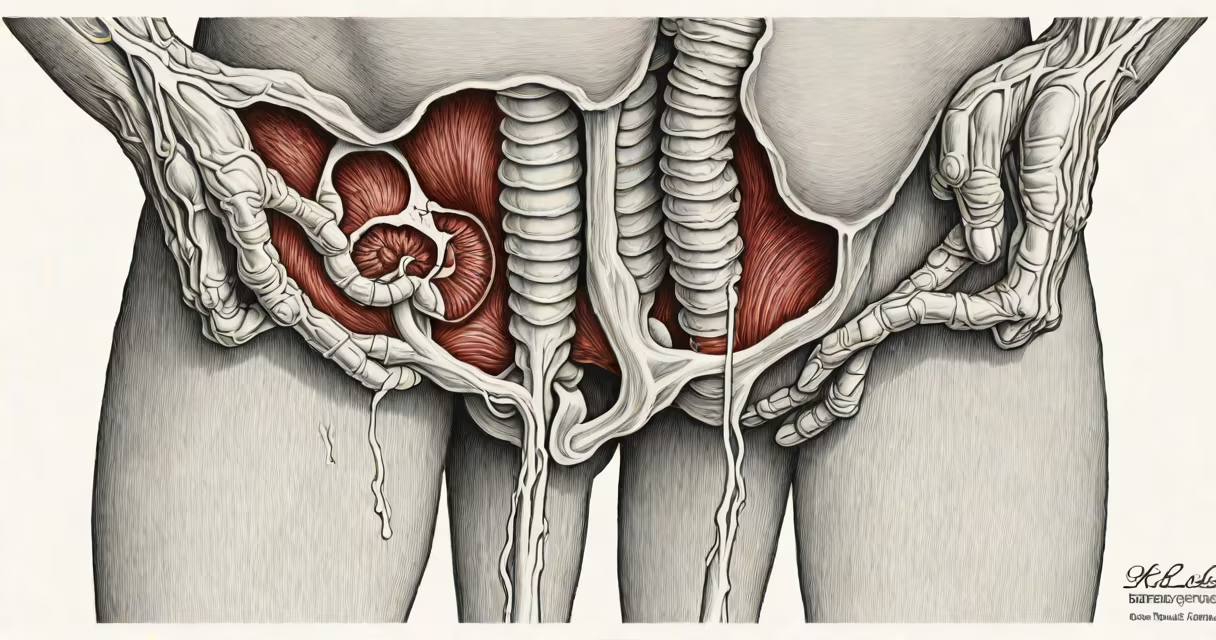
Hemorrhoids bleeding without bowel movement typically indicates internal hemorrhoids, where swollen veins in the rectum bleed easily. This occurs because the delicate rectal tissue lacks protective skin, making it prone to injury and bleeding.
Internal hemorrhoids form when pressure increases in the rectal veins, causing them to swell and bulge. This pressure can come from straining during bowel movements, prolonged sitting, pregnancy, or chronic constipation. The thin rectal walls lack pain sensors, so bleeding may occur without pain or awareness of a bowel movement.
The bleeding usually appears as bright red blood on toilet paper, in the toilet bowl, or dripping into the toilet. Unlike bleeding from higher in the digestive tract, hemorrhoidal bleeding doesn't mix with stool.
| Type | Location | Symptoms |
|---|---|---|
| Internal | Inside rectum | Painless bleeding, prolapse (in severe cases) |
| External | Around anus | Pain, swelling, itching |
While hemorrhoids are common, any rectal bleeding warrants medical evaluation. Seek immediate attention if you notice:
These symptoms could indicate more serious conditions like inflammatory bowel disease or colorectal cancer.
Many people assume all rectal bleeding comes from hemorrhoids. However, other causes include anal fissures, diverticulosis, or even colon polyps. Unlike hemorrhoidal bleeding, bleeding from higher sources often appears darker and mixes with stool.
Another myth is that bleeding always occurs during or after a bowel movement. Internal hemorrhoids can bleed spontaneously due to increased pressure from coughing, lifting, or even bending over.
Most cases resolve with lifestyle changes: increasing fiber intake, staying hydrated, and avoiding prolonged sitting. Over-the-counter treatments like topical creams or suppositories can reduce inflammation. Severe cases may require medical procedures like rubber band ligation or sclerotherapy.
I once treated persistent hemorrhoidal bleeding by adding psyllium husk to my daily routine and using a squatty potty to improve bowel mechanics. The combination reduced both straining and bleeding within weeks.