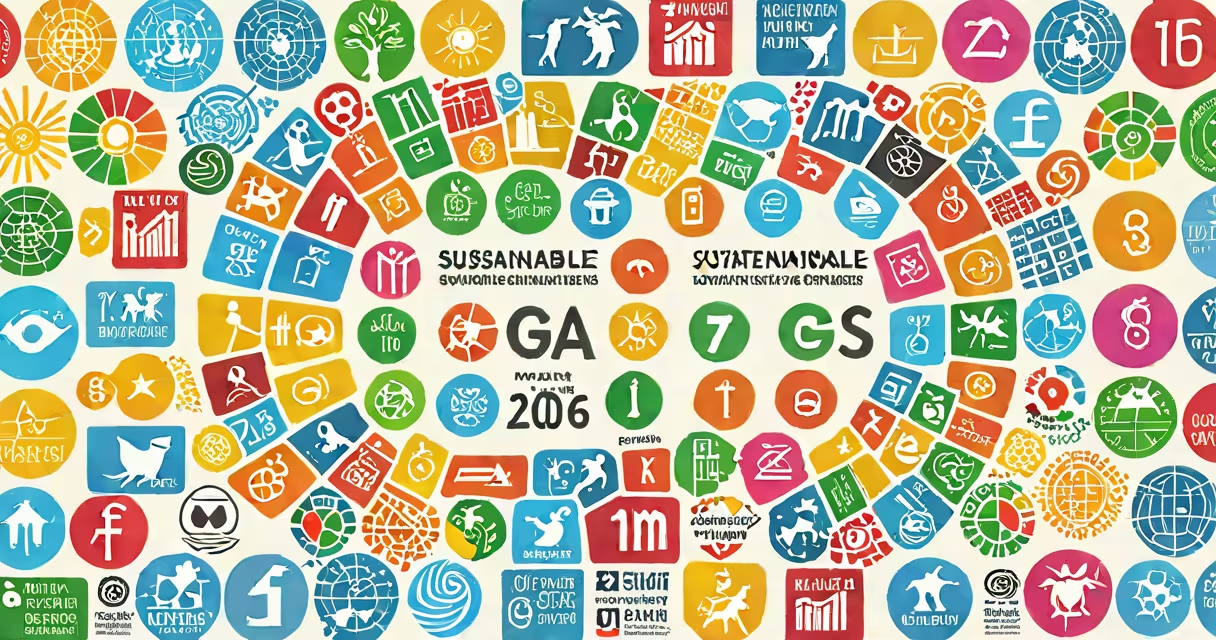
The United Nations established 17 Sustainable Development Goals (SDGs) in 2015 as part of the 2030 Agenda for Sustainable Development. These goals address global challenges related to poverty, inequality, climate change, and environmental degradation.
The SDGs are a universal call to action to end poverty, protect the planet, and ensure all people enjoy peace and prosperity by 2030. They were adopted by all 193 member states of the United Nations and cover social, economic, and environmental dimensions of sustainable development.
The 17 goals are interconnected and indivisible, meaning progress in one area often affects outcomes in others. For example, achieving gender equality (Goal 5) can contribute to reducing hunger (Goal 2) by ensuring women have equal access to resources and opportunities.
The SDGs are grouped into five broad categories:
The SDGs are implemented globally, with countries developing their own strategies to achieve these targets. They serve as a structure for governments, businesses, and civil society to collaborate on solving the world's most pressing issues.
For instance, the 15th goal focuses on life on land, aiming to halt deforestation and restore degraded forests. This goal is important for mitigating climate change and preserving biodiversity.
Many people confuse the SDGs with the Millennium Development Goals (MDGs), which were eight international development targets established in 2000 and expired in 2015. The SDGs build on the MDGs but are more complete and ambitious.
Another misconception is that the SDGs are only relevant to developing countries. In reality, they apply to all nations, including developed ones, as global challenges require collective action.
Goal 6 aims to ensure availability and sustainable management of water and sanitation for all. This includes targets like achieving universal access to safe drinking water, adequate sanitation, and hygiene. Progress toward this goal is measured using indicators such as the proportion of the population using safely managed drinking water services.
For example, the UN reports that as of 2020, 74% of the global population had access to safely managed drinking water, up from 69% in 2015. However, significant disparities remain between urban and rural areas, highlighting the need for continued efforts.
In my work with local communities, I've seen how small-scale initiatives can contribute to larger SDG targets. For instance, a community garden project fosters community engagement and education (Goal 4). These projects demonstrate how interconnected the goals are and how local actions can have a global impact.