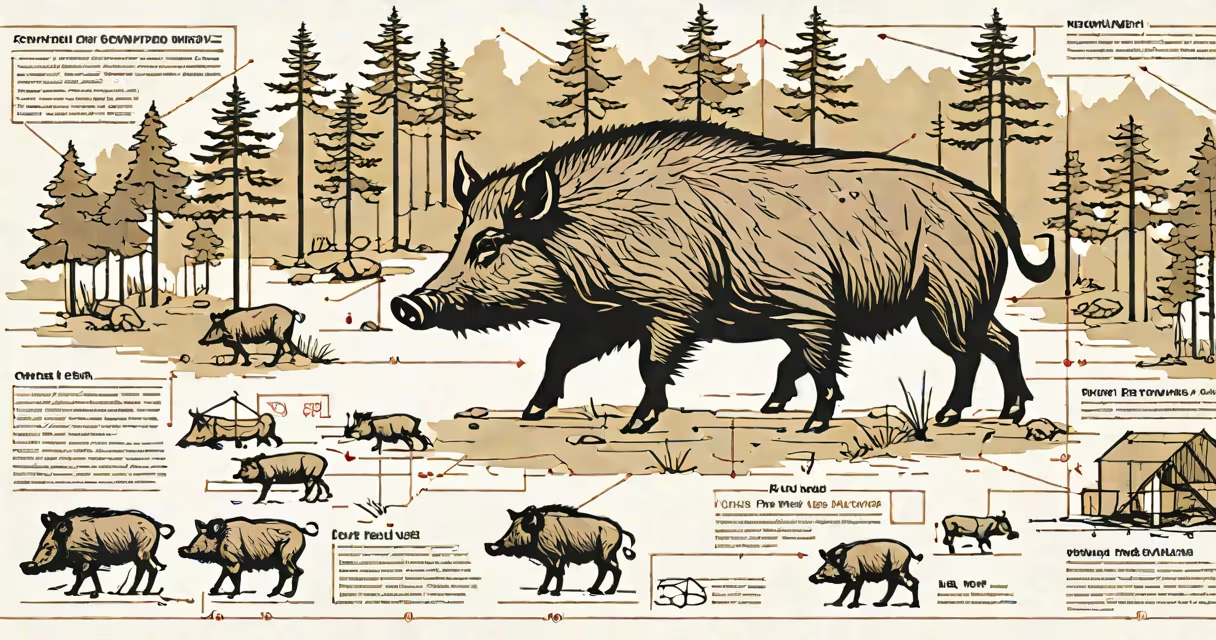
"Wild" in Spanish is "salvaje." This term describes animals or plants that grow naturally without human intervention.
The word "salvaje" comes from the Latin "silvaticus," meaning "of the woods." It's used for untamed nature, unlike "domestic" (doméstico) for animals raised by humans.
| Term | Meaning | Example |
|---|---|---|
| Salvaje | Wild (general) | Un oso salvaje (a wild bear) |
| Fiero | Fierce/wild (animals) | Un tigre fiero (a fierce tiger) |
| Indómito | Untamed/wild | Un caballo indómito (an untamed horse) |
Spanish speakers use "salvaje" to describe natural environments, like "la naturaleza salvaje" (wild nature). It's also used for behavior, such as "actuar de manera salvaje" (to act wildly).
For example, in Costa Rica, "reserva biológica" (biological reserve) protects "flora y fauna salvaje" (wild flora and fauna).
Some confuse "salvaje" with "bruto" (brute) or "salvaje" with "rústico" (rustic). "Bruto" implies roughness, while "rústico" describes rural simplicity.
For instance, "un hombre bruto" means a rough man, not a wild one. Similarly, "una cabaña rústica" refers to a rustic cabin, not a wild one.
While hiking in Spain's Pyrenees, I saw "cabras salvajes" (wild goats). The guide explained their behavior differs from domestic goats due to their untamed environment.
I also learned that "salvaje" isn't always negative. In some contexts, it conveys respect for nature's power, like "el mar salvaje" (the wild sea).