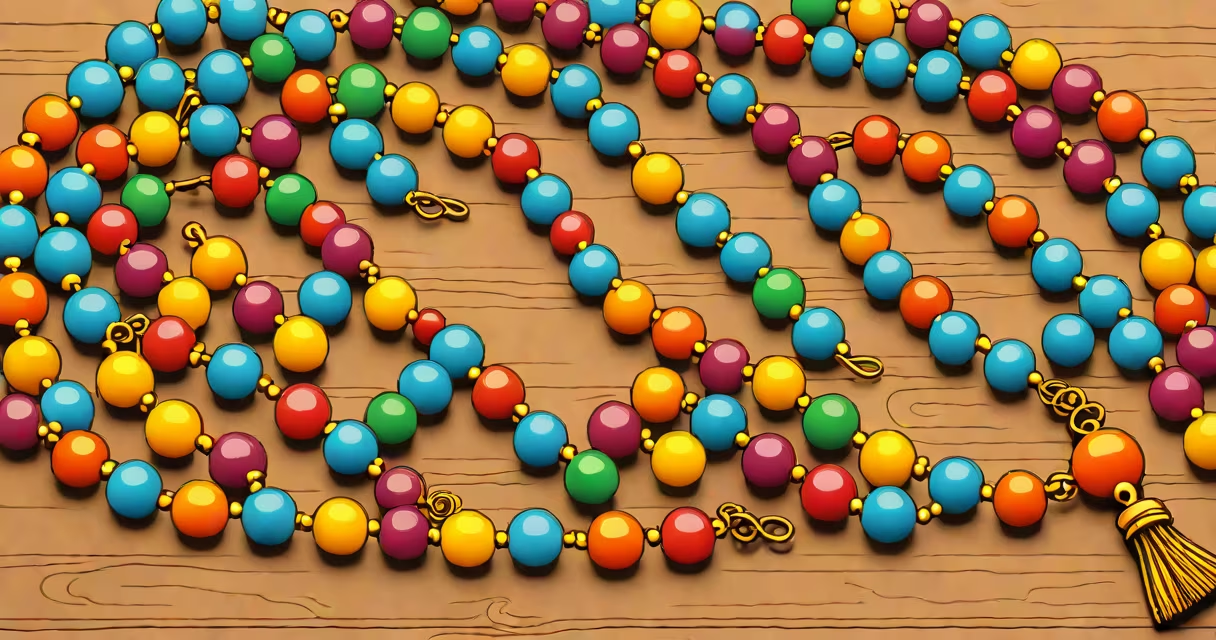
Buddhist mala beads are a string of 108 beads used for meditation, prayer, and mindfulness. They help practitioners count mantras, breaths, or affirmations during spiritual exercises.
Each bead represents a repetition or cycle, guiding the user through a structured practice. The beads are typically held between the thumb and middle finger, avoiding contact with the index finger-a symbol of ego.
Mala beads come in various materials, each with unique properties:
| Material | Common Uses |
|---|---|
| Sandstone | Durable and affordable, often used by beginners |
| Wood | Lightweight, popular for travel |
| Seeds | Traditional, such as rudraksha or tulsi seeds |
| Gemstones | Used for specific healing properties, like amethyst for calmness |
Mala beads are primarily used in Buddhist and Hindu traditions but have gained popularity in secular mindfulness practices. They serve as a tactile aid to focus the mind, much like a rosary in Christianity.
Many people assume mala beads must be used with a specific mantra. However, they can be adapted to any repetitive practice, such as counting breaths or reciting personal affirmations. Another mistake is using the index finger, which is avoided to prevent reinforcing ego during meditation.
To use mala beads for meditation:
The number 108 holds significant spiritual meaning. It's believed to represent the number of earthly desires one must overcome to reach enlightenment. This number is also found in various aspects of nature, such as the distance between the Earth and the Moon being approximately 108 times the diameter of the Moon.