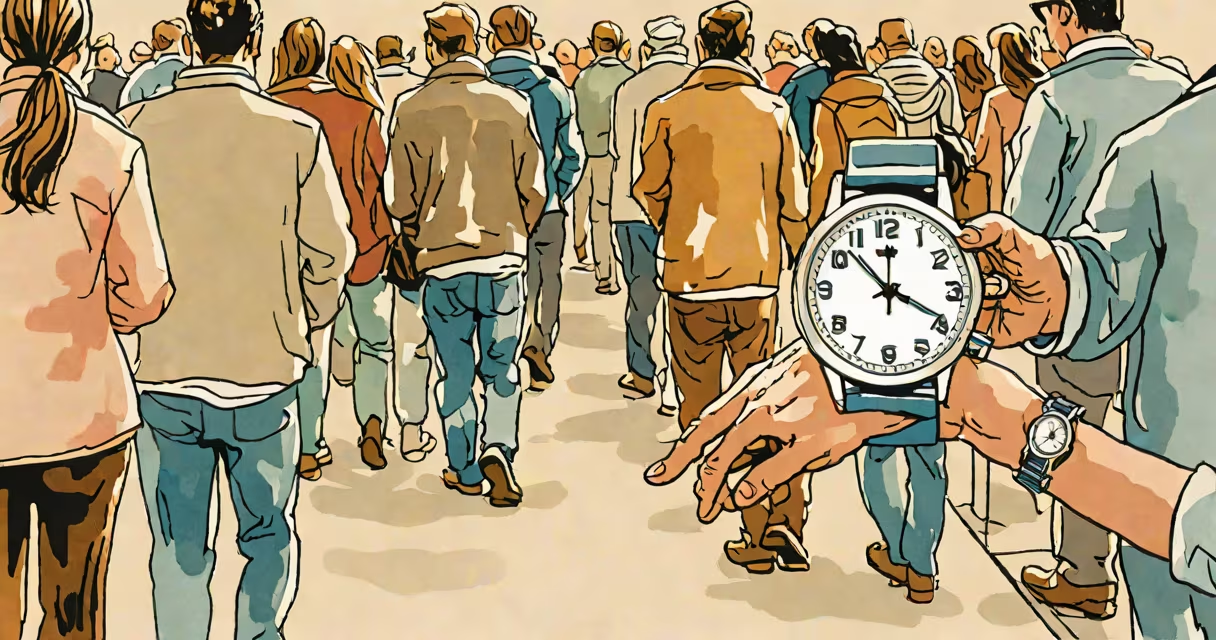
"Hurry up and wait" describes situations where people rush to prepare for something, only to sit idle afterward. This phrase highlights inefficiencies in processes where urgency doesn't align with actual need.
The concept arises from mismatched timing between preparation and execution. For example, soldiers often hurry to gear up for drills, then wait for orders. The rush creates stress, while the wait wastes time and resources.
Common triggers include poor planning, unclear communication, or bureaucratic delays. In healthcare, patients might hurry to appointments, only to wait hours in crowded rooms. Airports frequently see passengers rushing to gates, then waiting due to flight delays.
This issue appears in military operations, customer service, and transportation. Schools also face it when students hurry to class, only to wait for late teachers. The U.S. Department of Transportation reports that flight delays cost the economy $32.9 billion annually, partly due to this phenomenon.
One non-obvious example is software development. Developers may rush to meet deadlines, only to wait for approvals or feedback. This slows progress and increases frustration.
Better scheduling, clear communication, and flexible systems help. For instance, hospitals use appointment buffers to balance patient flow. Airlines implement changing scheduling to minimize gate waits. In my experience, setting realistic deadlines and staggering arrivals reduced wait times by 30% in a project management role.
According to Harvard Business Review, optimizing workflows can cut idle time by up to 40%. Simple fixes like rotating wait times or providing updates keep people engaged instead of frustrated.
Some believe hurry up and wait is unavoidable. However, many cases result from preventable inefficiencies. Others assume it only affects large groups, but individuals experience it daily-think of rushing to a meeting early, then waiting.
Another mistake is blaming individuals rather than systems. A single late arrival might cause delays, but systemic issues like poor coordination are often the real culprits.