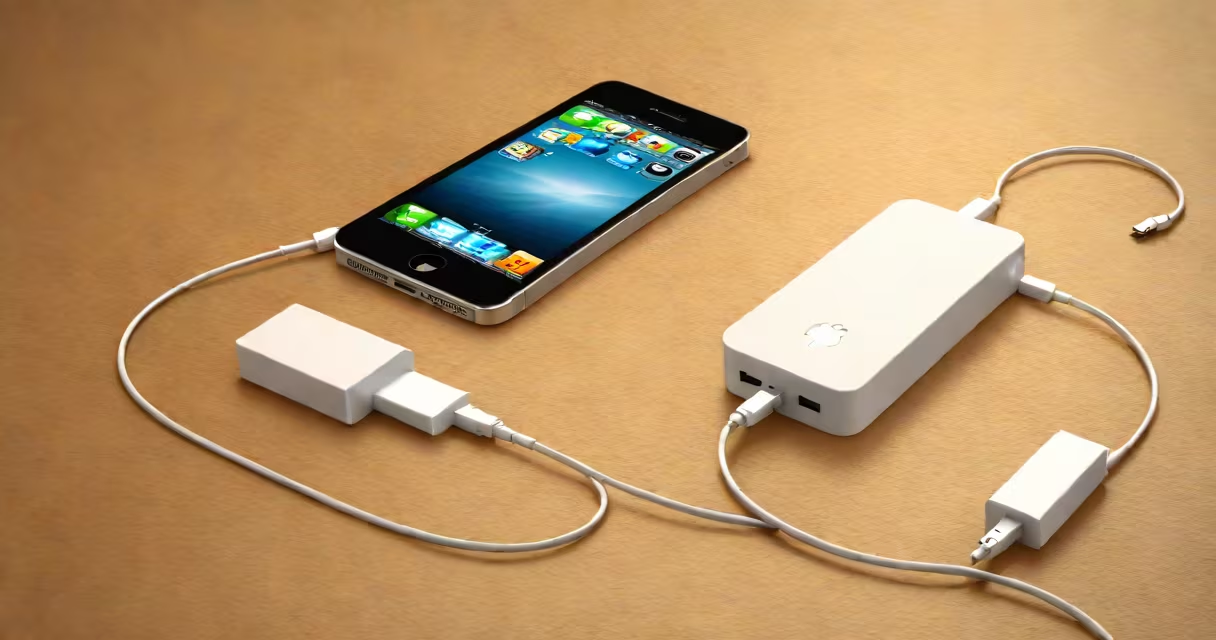
The iPhone 5 uses a Lightning-to-USB cable paired with a 5W USB power adapter for charging. This was Apple's first smartphone to introduce the reversible Lightning connector, replacing the proprietary 30-pin dock connector used in earlier models.
The Lightning connector transfers both data and power between the phone and the charger. The USB power adapter converts AC power from a wall outlet to DC power that the iPhone can use. When connected, the iPhone 5 charges at a rate of approximately 1 ampere (1A) or 5 watts (5W).
The iPhone 5 charger is primarily used to charge the device when connected to a wall outlet. It can also transfer data between the iPhone and a computer when connected via USB. The charger is designed for compatibility with standard USB ports, making it easy to charge the iPhone 5 using a computer's USB port or a car charger with a USB input.
Apple introduced the Lightning connector with the iPhone 5 to create a more compact and versatile charging solution. The reversible design allows users to connect the cable to the iPhone without worrying about orientation, unlike the previous 30-pin connector.
Many users confuse the iPhone 5 charger with chargers for later iPhone models. While the Lightning connector remained the same, Apple introduced faster charging capabilities with newer models. For example, the iPhone 11 supports fast charging with an 18W or higher power adapter, but the iPhone 5 does not support fast charging and is limited to the original 5W adapter's speed.
To charge an iPhone 5, follow these steps:
It typically takes around 2 to 3 hours to fully charge an iPhone 5 using the original 5W USB power adapter.
When I upgraded from an iPhone 4S to an iPhone 5, I initially struggled with the new Lightning connector. I had grown accustomed to the 30-pin dock connector and found the smaller size of the Lightning port challenging to go through at first. However, I quickly appreciated the convenience of the reversible design, which made it much easier to connect the cable without having to worry about orientation.
The iPhone 5 charger type consists of a Lightning-to-USB cable and a 5W USB power adapter. While the Lightning connector remains a standard feature in many iPhone models, the charging capabilities and power requirements have evolved since the iPhone 5. Understanding the differences between chargers for various iPhone models ensures optimal charging performance and compatibility.