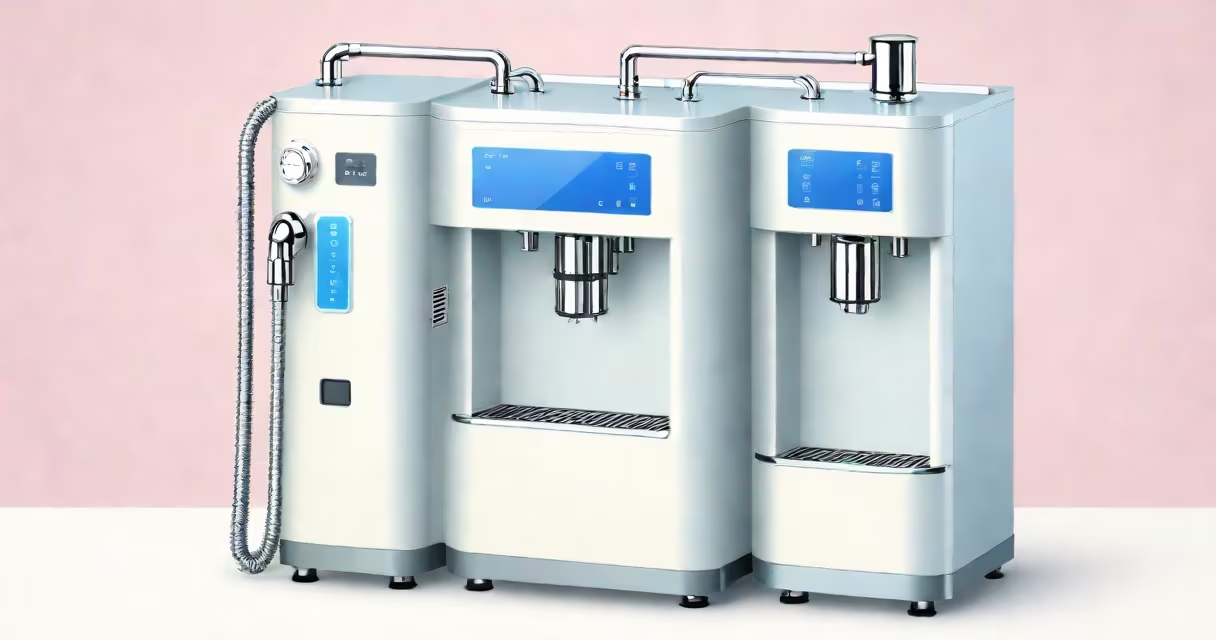
A Japanese water machine is a device that purifies tap water and often ionizes it to increase its pH level, creating alkaline water. These machines combine filtration with electrolysis to produce healthier drinking water.
Most Japanese water machines use a multi-stage process. First, they filter out impurities like chlorine, heavy metals, and microorganisms. Then, they use electrolysis to split water into acidic and alkaline streams. The alkaline stream is used for drinking, while the acidic water can be used for cleaning.
The electrolysis process involves passing an electric current through water after it has been filtered. This separates the water into two streams based on their pH levels. The alkaline water is rich in hydroxyl ions (OH-), which gives it a higher pH, typically between 8 and 10. The acidic water, however, has a lower pH, usually between 4 and 7.
| Type | Features | Common Uses |
|---|---|---|
| Basic Filtration | Removes impurities but doesn't ionize water | Everyday drinking water |
| Water Ionizers | Filters and ionizes water, often with multiple settings | Health-conscious users seeking alkaline water |
| Multi-Function Machines | Combines filtration, ionization, and sometimes mineral addition | Users wanting complete water treatment |
Many people believe alkaline water helps neutralize acid in the bloodstream, improving health. Some studies suggest that alkaline water can help with acid reflux, high cholesterol, and hypertension. However, scientific evidence is still limited, and more research is needed to confirm these benefits.
Beyond health benefits, Japanese water machines are popular because they provide clean, great-tasting water. They are commonly used in homes, offices, and even in some restaurants. The machines are designed to be compact and easy to use, fitting well in modern kitchens.
One common misconception is that all Japanese water machines are the same. In reality, they vary widely in features and capabilities. Some machines only filter water, while others offer advanced ionization and mineral addition. Another misconception is that alkaline water is a cure-all for various health issues. While it may have some benefits, it is not a substitute for medical treatment.
According to the National Center for Biotechnology Information, more research is needed to fully understand the health impacts of alkaline water. The Mayo Clinic also notes that while alkaline water is generally safe to drink, its health benefits are not yet fully proven.
I tested a popular Japanese water ionizer in my home for a month. The machine had a digital display showing the pH level of the water. After using it for a few weeks, I noticed that the water tasted cleaner and fresher. The machine also had a setting for making acidic water, which I used for cleaning fruits and vegetables. While I can't confirm any health benefits, the improved taste and convenience were noticeable.
When selecting a Japanese water machine, consider your specific needs. If you primarily want clean drinking water, a basic filtration machine might suffice. However, if you are interested in the potential health benefits of alkaline water, a water ionizer would be a better choice. Look for machines with good reviews and reliable customer support.