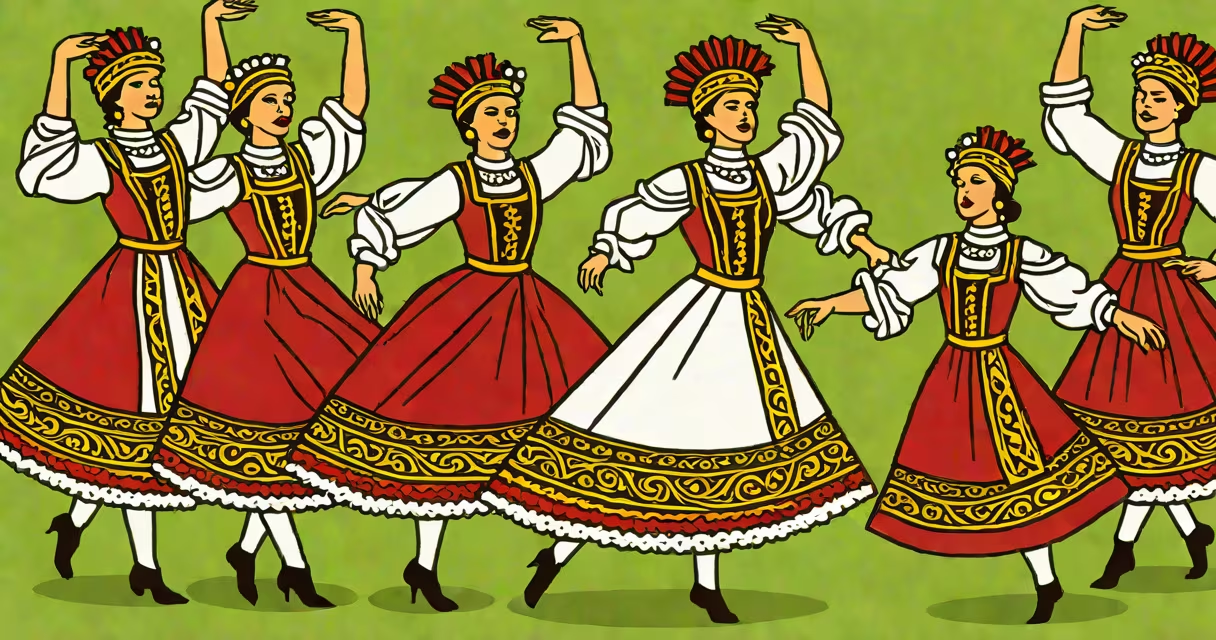
Justina Pula Shiroka is a traditional Latvian folk dance characterized by its complex footwork, rhythmic patterns, and storytelling elements. It is performed in a circle or line formation, often accompanied by singing.
The dance originates from the Latgale region of Latvia, an area with a rich cultural heritage influenced by both Latvian and Russian traditions. Justina Pula Shiroka dates back to the 19th century and was initially performed during seasonal festivals and community gatherings.
According to ethnographer Anra Lāce, the dance was named after a local woman, Justina Pula, who was known for her strong dancing skills. The name "Shiroka" translates to "wide" in Latvian, referring to the wide steps and expansive movements of the dance.
Justina Pula Shiroka is typically performed in a circle or line formation, with dancers holding hands or placing their arms around each other's shoulders. The dance consists of a series of rhythmic steps, including stomps, slides, and quick turns, accompanied by clapping and singing.
The dance is structured in parts, each with its own distinct rhythm and movement pattern. Dancers follow a leader who guides the group through the various sequences. The dance often begins with a slow, deliberate pace that gradually increases in speed and intensity.
There are several variations of Justina Pula Shiroka, each with its unique characteristics. Some common types include:
Justina Pula Shiroka holds significant cultural value in Latvia. It is a symbol of national identity and is often performed at cultural events, festivals, and celebrations. The dance is also a way to preserve and pass down Latvian traditions to younger generations.
In 2009, Justina Pula Shiroka was included in the UNESCO Representative List of the Intangible Cultural Heritage of Humanity, recognizing its importance as a cultural treasure.
One common misconception is that Justina Pula Shiroka is solely a performance dance meant for spectators. In reality, it is a participatory dance intended for community involvement and enjoyment. Another misconception is that the dance is exclusively performed by women. While traditionally women led the dance, men also participate and play integral roles in modern performances.
Justina Pula Shiroka is more than just a dance; it is a vibrant expression of Latvian culture and heritage. Its complex footwork, rhythmic patterns, and storytelling elements make it a unique and captivating tradition that continues to thrive in Latvia and among Latvian communities worldwide.