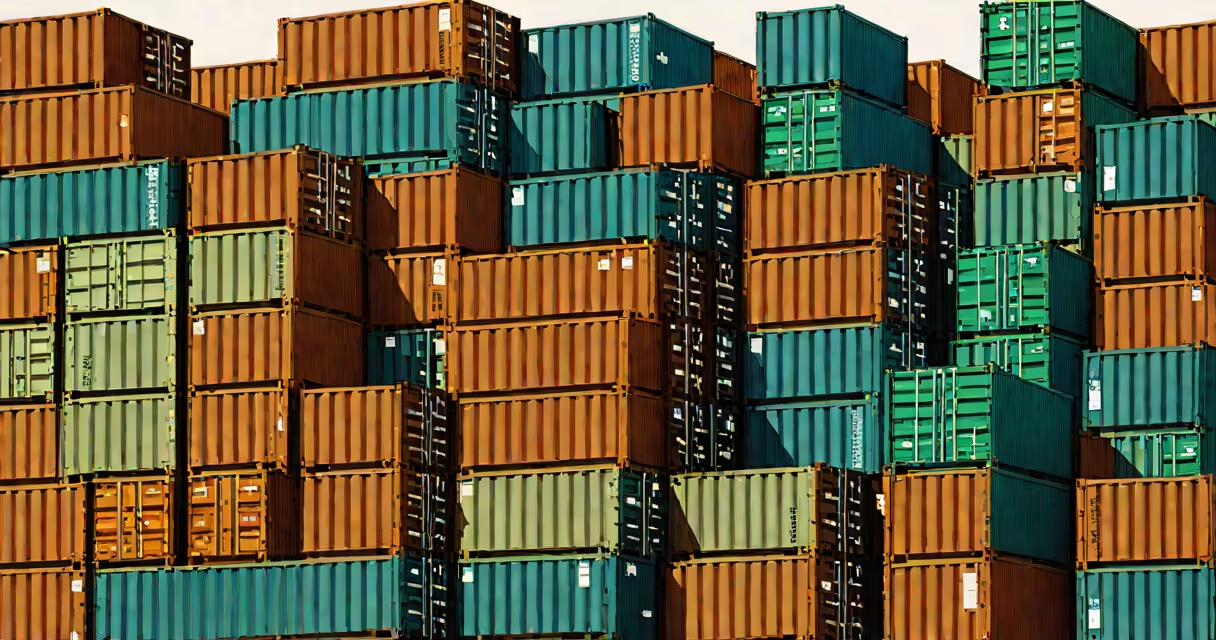
LCL (Less than Container Load) shipping means combining multiple small shipments from different shippers into one container. It's used for smaller cargo volumes that don't fill a standard container.
Freight forwarders collect goods from various customers and consolidate them into a single container at their warehouse. The container is then shipped to the destination port, where the cargo is deconsolidated and delivered to individual recipients.
For example, a small business shipping 2 cubic meters (cm) of goods to the U.S. would use LCL. Their cargo is combined with others' in a 20-foot container (which holds ~33 cm), then split again at the destination.
| Type | Description | Example |
|---|---|---|
| Groupage | Multiple small shipments consolidated into one container | A forwarder combines 10 shipments (each 1-5 cm) into a 20-foot container |
| Partial Load | One shipment that doesn't fill a container but is shipped alone | A 12-cm shipment sent as a partial load instead of waiting for consolidation |
LCL is cost-effective for small shipments (typically under 15 cm). It avoids paying for unused container space but adds handling time due to consolidation and deconsolidation.
FCL (Full Container Load) ships a single consignment filling an entire container. LCL consolidates multiple small shipments.
FCL is faster and cheaper per unit for large volumes (e.g., 20+ cm), while LCL is better for smaller, infrequent shipments. A 3-cm shipment would cost $1,200 via FCL but only $600 via LCL.
Many assume LCL is always slower than FCL, but transit times are often similar. Delays come from consolidation, not the voyage itself.
Another myth is that LCL is riskier due to handling. While there's a slight increase in damage risk, professional forwarders minimize this with careful packing and tracking.
I once coordinated an LCL shipment of 4 cm of electronics. By choosing a reputable forwarder, the cargo arrived undamaged and only 2 days later than an FCL option would have.
The International Air Transport Association (IATA) notes that LCL accounts for 60% of global sea freight. It's widely used for retail, e-commerce, and manufacturing.