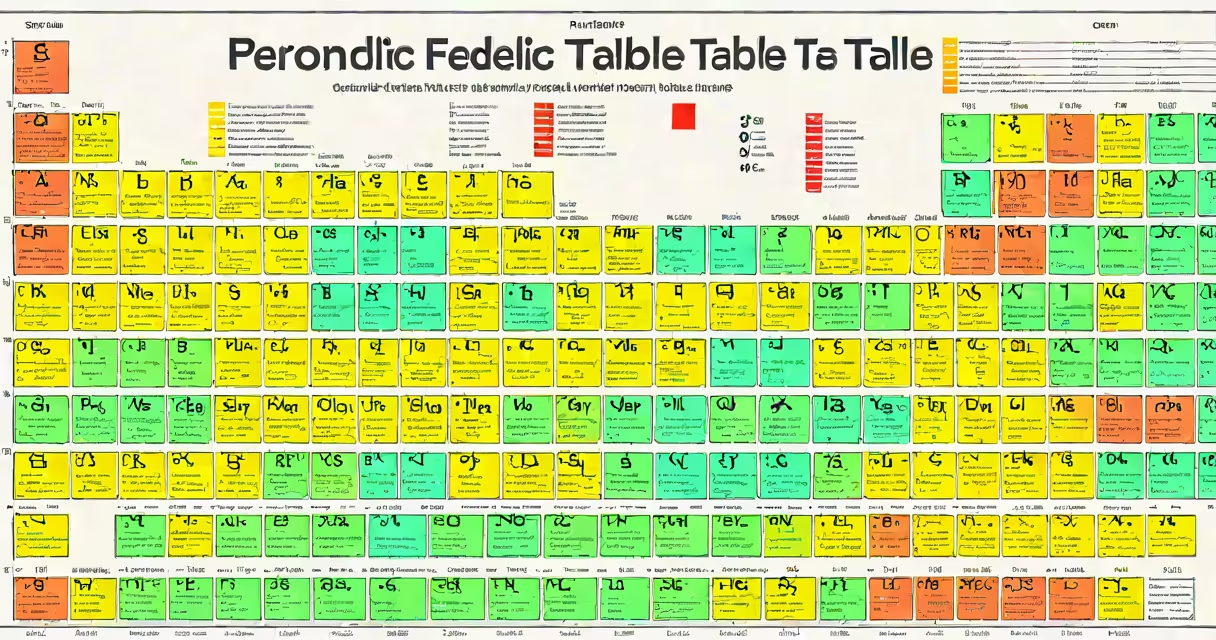
Learning the periodic table means mastering the arrangement, properties, and patterns of chemical elements using effective study techniques. This goes beyond memorization to understand how elements relate to each other.
The periodic table organizes elements by atomic number, electron configurations, and recurring chemical properties. Elements are arranged in rows (periods) and columns (groups). Each group shares similar characteristics due to their valence electron count.
For example, Group 1 elements (alkali metals) like lithium, sodium, and potassium all have one valence electron, making them highly reactive. Understanding these patterns helps predict element behavior.
| Group | Examples | Key Characteristics |
|---|---|---|
| Alkali Metals | Lithium, Sodium, Potassium | High reactivity, soft texture |
| Halogens | Fluorine, Chlorine, Bromine | High reactivity, form salts with metals |
| Noble Gases | Helium, Neon, Argon | Low reactivity, stable electron configurations |
| Transition Metals | Iron, Copper, Gold | Variable oxidation states, conductive properties |
Rote memorization is inefficient. Instead, use these methods:
Many learners confuse the periodic table with a random list of elements. In reality, it's a carefully organized system based on atomic structure and chemical behavior.
Another mistake is focusing solely on element names while neglecting symbols. Symbols are important for chemistry equations and lab work. For example, knowing that "Au" stands for gold is more useful than just knowing it's called gold.
Understanding the periodic table is essential for chemistry, physics, and materials science. It helps predict how elements will react, what compounds they'll form, and their potential uses.
Beyond academics, the periodic table has real-world applications. It helps in selecting materials for construction, understanding environmental processes, and even in cooking (where reactions between elements affect food preparation).