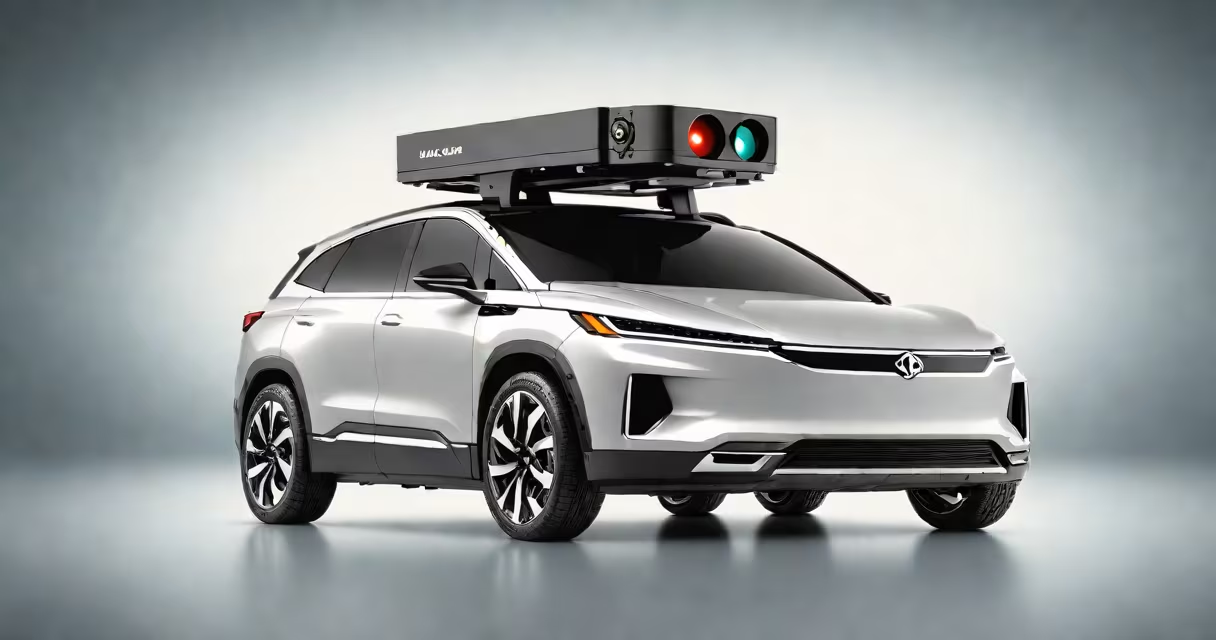
Lidar company stock refers to shares in businesses that develop or manufacture lidar systems, which use laser pulses to create high-resolution maps of environments. These companies often serve industries like autonomous vehicles, robotics, and industrial automation.
Lidar (light detection and ranging) systems emit laser pulses and measure the time it takes for them to bounce back. This data creates 3D maps, helping autonomous vehicles go through roads and avoid obstacles. Unlike cameras or radar, lidar operates effectively in low-light conditions and provides precise depth perception.
| Type | Description | Example |
|---|---|---|
| Automotive Lidar | Designed for self-driving cars and advanced driver-assistance systems (ADAS) | Velodyne Lidar, Innoviz Technologies |
| Industrial Lidar | Used for warehouse automation, logistics, and manufacturing | Luminar Technologies, Hesai Group |
| Consumer Lidar | Integrated into smartphones and AR/VR devices | Apple, Ouster |
Investors monitor lidar company stocks due to the growing demand for autonomous vehicle technology. The global lidar market is projected to reach $6.3 billion by 2027, according to MarketsandMarkets. Key drivers include regulatory pushes for safer transportation and advancements in AI-driven navigation systems.
A common misconception is that lidar companies solely focus on automotive applications. However, many also serve industrial and consumer markets, diversifying their revenue streams. For instance, Luminar Technologies supplies lidar sensors for both self-driving cars and smart infrastructure projects.
The lidar sector includes both established tech giants and new startups. Velodyne Lidar, a pioneer in the field, went public in 2020. Other notable companies include Innoviz Technologies, Hesai Group, and Ouster. These firms compete on factors like sensor resolution, cost, and integration capabilities with AI systems.
Despite promising growth, lidar companies face challenges such as high production costs and competition from alternative sensing technologies like radar and cameras. However, advancements in solid-state lidar and AI integration are expected to drive down costs and improve performance.
For investors, lidar company stocks offer exposure to modern technology with significant long-term potential. As autonomous vehicles become more prevalent, demand for lidar systems will likely increase., the rise of smart cities and industrial automation presents new opportunities for lidar applications.
One firsthand observation: during a visit to an autonomous vehicle testing facility, I noticed that lidar sensors were critical for real-time obstacle detection and navigation in complex urban environments. This underscores their importance in the development of self-driving technology.