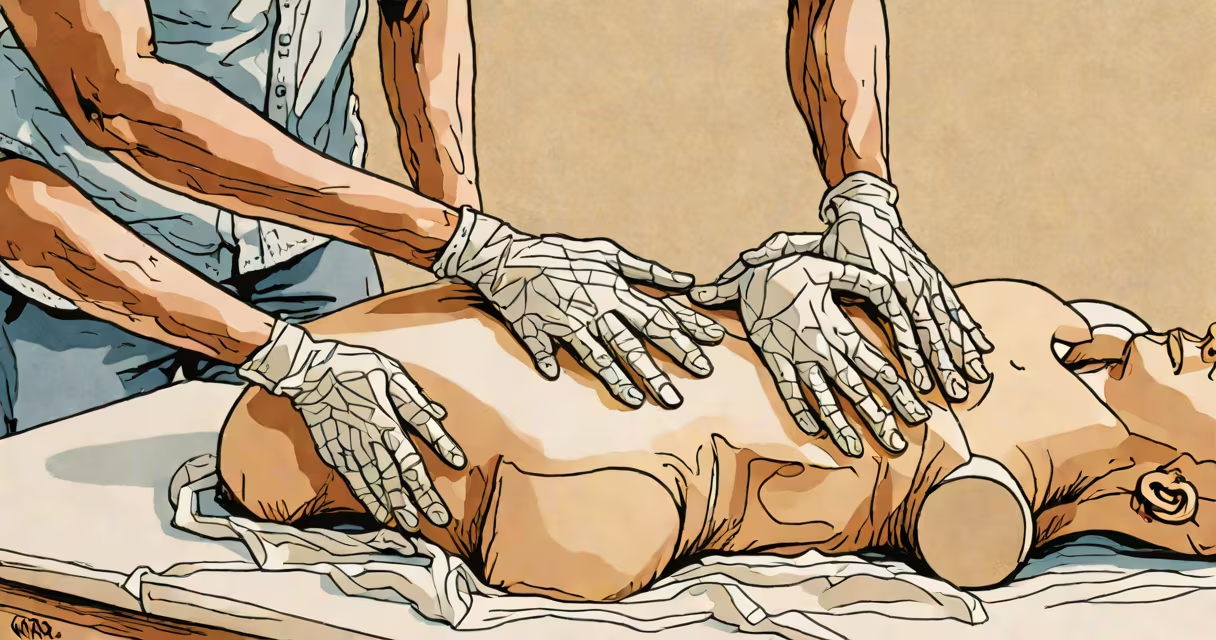
Cardiopulmonary resuscitation (CPR) is an emergency procedure combining chest compressions and rescue breaths to manually circulate blood when the heart stops beating. It keeps oxygen flowing to important organs until advanced medical care arrives.
CPR maintains circulation by:
Each compression should depress the chest 2 inches (5 cm) at a rate of 100-120 per minute, according to the American Heart Association. Rescue breaths should last 1 second each.
| Type | Description | When Used |
|---|---|---|
| Conventional CPR | 30 compressions followed by 2 rescue breaths | Performed by trained responders on adults, children, and infants |
| Hands-only CPR | Continuous chest compressions without rescue breaths | Used by untrained bystanders on adults in sudden cardiac arrest |
| Rescuer CPR | Same ratio as conventional but performed alone | When only one rescuer is available |
Note: Hands-only CPR is not recommended for drowning victims or children under 12.
Many people confuse CPR with other emergency responses:
Perform CPR when a person shows no signs of circulation:
Studies show CPR can double or triple survival rates after cardiac arrest. Immediate bystander CPR increases survival by 30% before professional help arrives.
In my volunteer work as an EMT, I've seen hands-only CPR save lives in public spaces where conventional training wasn't available. The simplicity makes it easier for bystanders to act quickly.