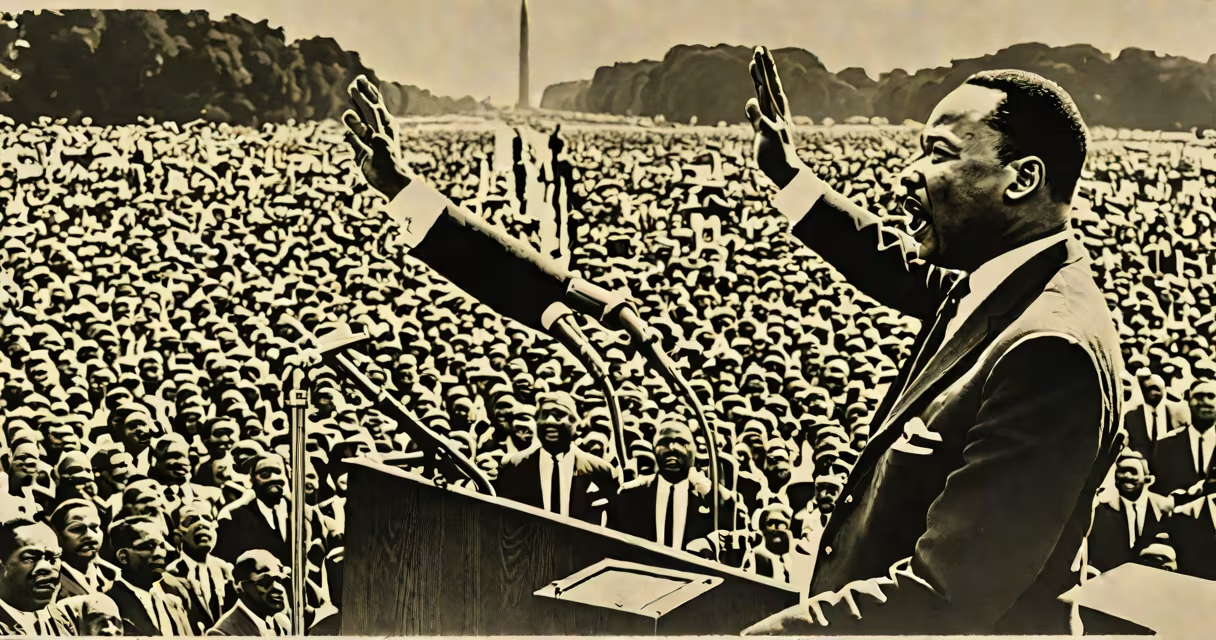
Martin Luther King Jr. played a key role in advocating for the Civil Rights Act of 1964, a landmark federal law that outlawed discrimination based on race, color, religion, sex, or national origin. The act prohibited unequal application of voter registration requirements and racial segregation in schools, the workplace, and facilities serving the general public.
Dr. King and the Southern Christian Leadership Conference (SCLC) organized protests, sit-ins, and marches to pressure lawmakers. His speeches, including his iconic "I Have a Dream" address during the 1963 March on Washington, galvanized support for civil rights legislation.
The SCLC's Birmingham campaign in 1963 drew national attention to police brutality against peaceful protesters. Television footage of police turning fire hoses and dogs on demonstrators, including children, shocked the nation and intensified demands for federal action.
The Civil Rights Act of 1964 banned unequal application of voter registration requirements and racial segregation in schools, the workplace, and facilities serving the general public. It also established the Equal Employment Opportunity Commission (EEOC) to enforce provisions of the law.
Title II of the act prohibited discrimination in hotels, restaurants, theaters, and other public accommodations. Title VI barred discrimination in federally assisted programs. Title VII created protections against employment discrimination.
President John F. Kennedy initially proposed the bill in June 1963. After his assassination, President Lyndon B. Johnson championed the legislation. The bill faced fierce opposition, especially by southern Democrats who staged a filibuster lasting 57 days-the longest in Senate history.
On July 2, 1964, President Johnson signed the bill into law. The legislation marked a significant victory for the civil rights movement and expanded federal protection of civil rights. Learn more about the Civil Rights Act's signing.
Some believe the act immediately ended all racial discrimination. However, enforcement remained challenging, particularly in the South. Others mistakenly think it granted voting rights, which came later with the Voting Rights Act of 1965.
The act also faced criticism for excluding protections based on sexual orientation. These gaps show the ongoing struggle for complete civil rights legislation.
The Civil Rights Act of 1964 transformed American society by dismantling legal segregation and establishing federal oversight of civil rights. It empowered individuals to challenge discriminatory practices in courts and sparked further activism for equality.
The act remains a key part of American democracy, reflecting the nation's commitment to equality under the law. Its passage demonstrated the power of peaceful protest and legislative action in achieving social change.