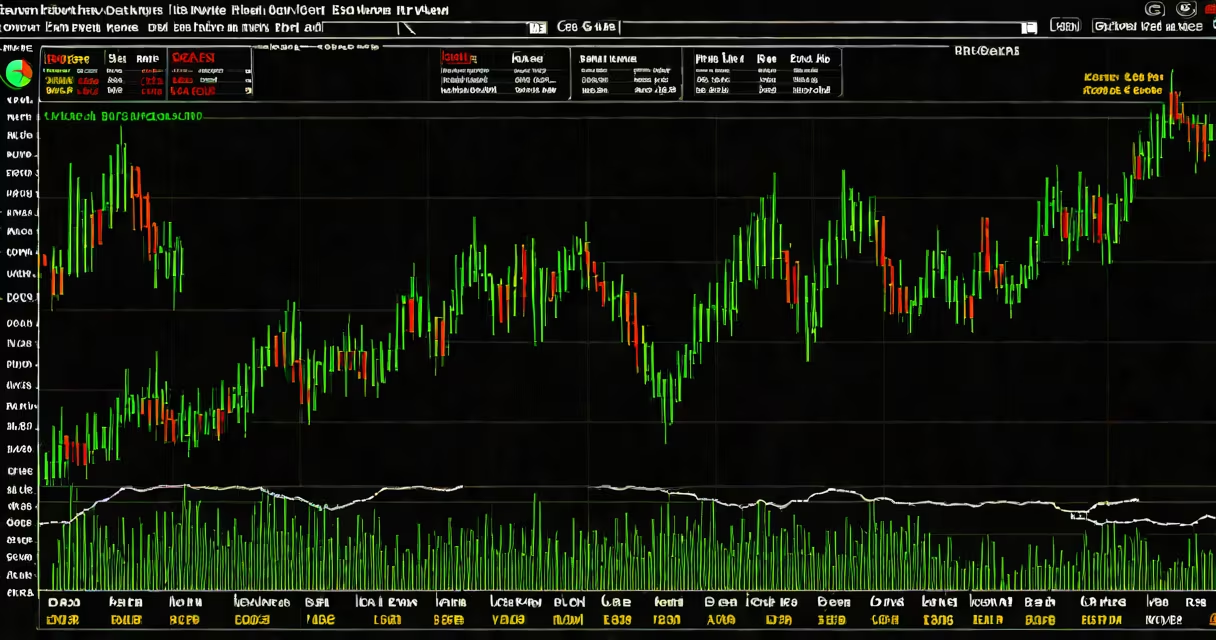
Momentum stock trading is a strategy that buys stocks rising in price and sells them when their upward momentum slows. It relies on volume and volatility to identify trends and capitalize on short-term price movements.
This strategy assumes that stocks continuing an existing trend are more likely to keep moving in that direction. Traders look for stocks with increasing volume and upward price momentum, entering long positions as the stock rises and exiting when momentum wanes.
For example, a trader might buy a stock after it breaks out from a consolidation phase with higher-than-average volume. They then hold the position until the stock shows signs of slowing momentum, such as lower volume or a price reversal.
| Strategy | Description | Time Horizon |
|---|---|---|
| Breakout Trading | Buying when a stock's price moves above resistance levels | Short-term |
| Pullback Trading | Buying during temporary dips within an uptrend | Medium-term |
| Scalping | Making small profits on minor price changes | Very short-term |
Traders use this strategy because it doesn't require deep fundamental analysis. Instead, it focuses on price action and volume, making it accessible to those who prefer technical analysis.
Many traders confuse momentum trading with trend following. While both strategies rely on price trends, momentum trading focuses on the speed and strength of price movements, whereas trend following emphasizes the direction of the trend over time.
Another misconception is that momentum trading is purely reactive. In reality, successful momentum traders often set predefined entry and exit points based on technical indicators and risk management rules.
Suppose a stock has been consolidating between $50 and $52 for several days. On the fifth day, it breaks out above $52 with above-average volume. A momentum trader might enter a long position at $52.20, setting a stop-loss at $51.80. If the stock continues to rise, the trader holds the position, adding to it on pullbacks. They exit when the stock shows signs of slowing momentum, such as a drop in volume or a reversal below a key moving average.
In my experience, this strategy requires discipline. I once held a position too long, missing the optimal exit point and giving back most of my gains. Setting strict exit rules is important.
Traders use several indicators to identify momentum opportunities:
Momentum trading can be risky. Stocks can reverse suddenly, leading to significant losses. Traders must use stop-loss orders to manage risk., momentum trading requires constant monitoring, making it less suitable for part-time traders.
According to the Securities and Exchange Commission (SEC), momentum trading can lead to increased market volatility and potential market manipulation if not conducted responsibly.
Momentum stock trading is a strategy that capitalizes on short-term price trends using volume and volatility signals. It's popular among day traders and swing traders who prefer technical analysis over fundamental analysis. However, it requires discipline and strict risk management to be successful.