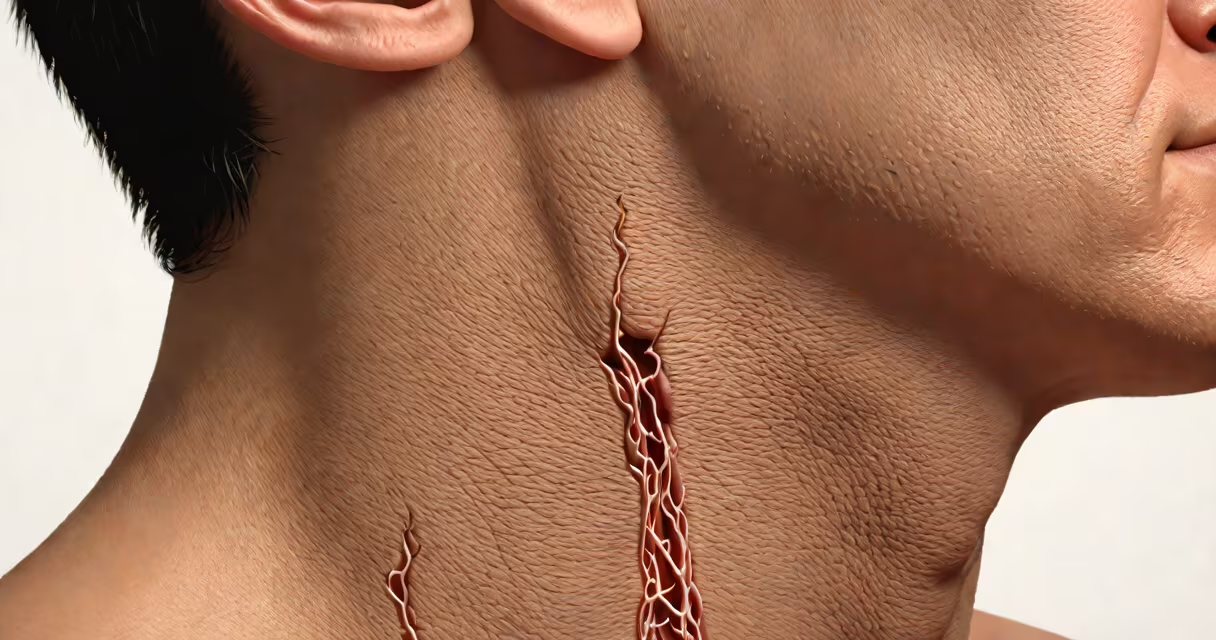
Neck vein twitching occurs when the jugular vein visibly pulsates or twitches due to increased blood flow or pressure. This phenomenon can be normal during physical exertion but may indicate underlying health issues when persistent.
The jugular veins carry deoxygenated blood from the head back to the heart. When blood flow increases-such as during exercise or stress-the veins may appear to twitch or pulsate more prominently. This is usually harmless, but prolonged or irregular twitching can signal problems with blood circulation or nerve function.
Neck vein twitching can result from various factors:
Consult a doctor if neck vein twitching persists beyond physical activity or is accompanied by other symptoms like dizziness, chest pain, or swelling. Persistent twitching without an obvious cause warrants medical evaluation to rule out underlying conditions.
A study published in the Journal of Clinical Neuroscience notes that while occasional twitching is normal, chronic cases should be investigated for potential neurological or cardiovascular issues.
Many people confuse neck vein twitching with muscle spasms or tremors. Unlike muscle spasms, which involve involuntary muscle contractions, vein twitching is related to blood flow changes. For example, a person with dehydration may notice their neck veins twitching more than usual, whereas muscle spasms typically occur due to electrolyte imbalances or overexertion.
I once experienced neck vein twitching after an intense workout. The veins were visibly pulsating, but the sensation disappeared after hydration and rest. However, if the twitching had persisted or been accompanied by other symptoms, I would have sought medical advice.
Neck vein twitching is generally harmless but can indicate underlying health issues if persistent. Understanding the causes and knowing when to seek medical attention ensures proper care and peace of mind.