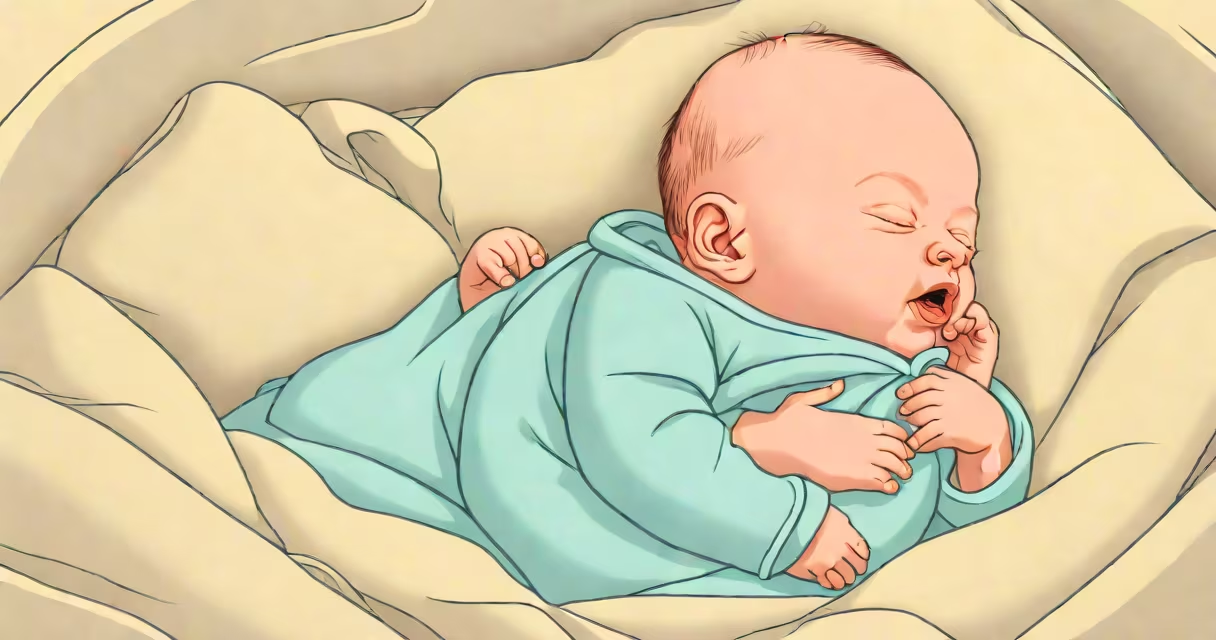
Newborn noises while sleeping include grunting, snorting, sighing, and even crying-all normal as their tiny airways develop. These sounds typically peak during active REM sleep.
Newborns spend about half their sleep time in active sleep (REM), compared to 20% for adults. During this phase, their breathing becomes irregular, causing those distinctive noises. The nasal passages are also much narrower, amplifying sounds.
| Noise Type | Common Causes | When It Occurs |
|---|---|---|
| Grunting | Attempting to exhale against a closed airway | During active sleep |
| Snorting | Sudden clearing of mucus or milk residue | Transitioning between sleep stages |
| Sighing | Reflexive response to slight oxygen fluctuations | Throughout sleep cycles |
| Crying | Hunger, discomfort, or overstimulation | Any sleep stage |
While most newborn noises are harmless, contact your pediatrician if:
In 2016, the American Academy of Pediatrics clarified that occasional snoring is normal, but persistent noisy breathing warrants evaluation.
Many parents mistake newborn sleep noises for signs of sleep apnea. True neonatal apnea is rare and involves pauses longer than 20 seconds. Most pauses under 10 seconds are normal transitions between breaths.
During my son's first weeks, his grunting was so loud I'd check his crib multiple times. His pediatrician reassured me these noises were developmental. By three months, they had diminished as his airways matured.