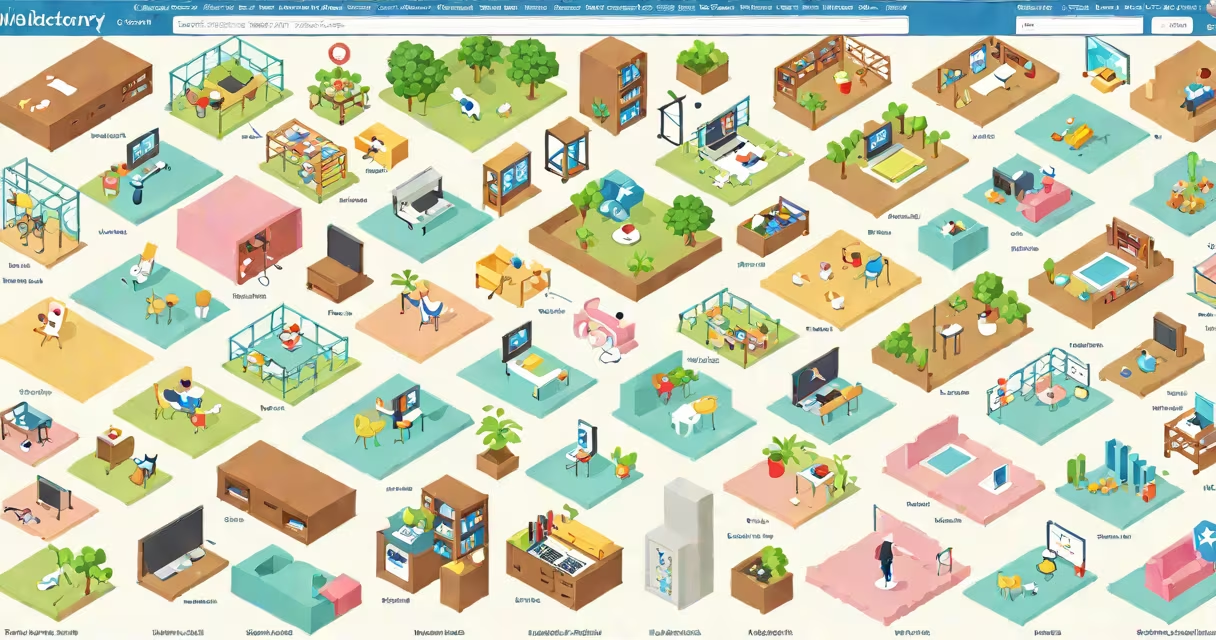
An online visual dictionary is a digital resource that pairs words with images to help users learn and remember vocabulary. These tools combine traditional dictionary functions with visual aids to create a more engaging learning experience.
Online visual dictionaries operate by displaying images alongside word definitions. Users can search for words, and the tool returns both the definition and a corresponding image. This dual approach leverages visual learning, which research shows can improve memory retention. For example, a search for "elephant" might return the definition along with a photo of an elephant, reinforcing the connection between the word and its meaning.
Most online visual dictionaries offer several key features:
Online visual dictionaries are used in various settings, including education, language learning, and content creation. Teachers use them to create engaging lessons, while students rely on them to study new vocabulary. Language learners find them particularly useful for memorizing new words in a foreign language. For instance, a student learning Spanish might use an online visual dictionary to see images of common objects alongside their Spanish names.
One common misconception is that online visual dictionaries replace traditional dictionaries. However, they complement rather than replace them. While traditional dictionaries provide detailed definitions and usage examples, online visual dictionaries improve learning through visual aids. Another misconception is that they are only useful for beginners. In reality, they can benefit all levels of learners by providing a different perspective on word meanings.
A lesser-known fact is that online visual dictionaries are particularly effective for learners with visual learning styles. According to a study by the University of California, visual learners retain information better when it is presented with images. This makes online visual dictionaries a useful tool for educators and students alike.
Imagine a user searching for the word "giraffe" in an online visual dictionary. The tool returns the definition: "A tall African mammal with a long neck and legs, and distinctive coat pattern." Alongside this definition, an image of a giraffe appears, helping the user visualize the animal. This combination of text and image makes the learning process more effective and memorable.
In my experience, using an online visual dictionary has improved my ability to recall new vocabulary. The visual component helps solidify the connection between the word and its meaning, making it easier to remember.
Online visual dictionaries are valuable tools for enhancing vocabulary learning through the use of images. They complement traditional dictionaries and cater to different learning styles, making them useful for many users. Whether for educational purposes, language learning, or content creation, these tools offer a unique and effective way to expand one's vocabulary.