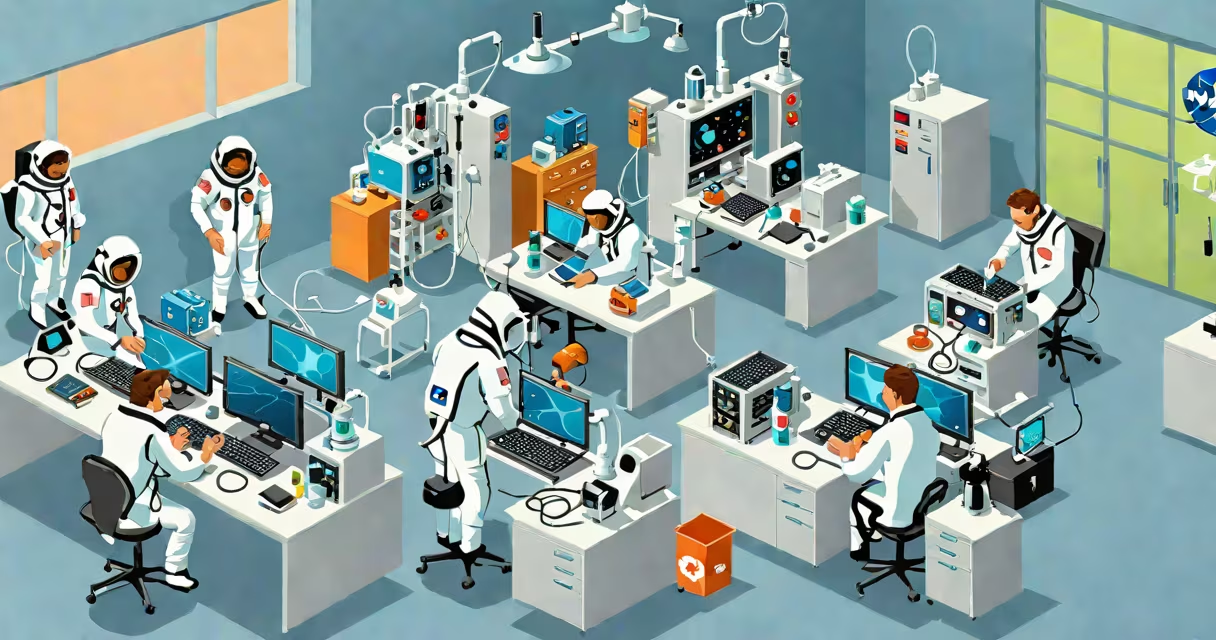
Open roles at NASA are job opportunities available through the U.S. space agency for professionals in engineering, science, administration, and other fields supporting space exploration missions. These roles contribute to NASA's work in aeronautics, space technology, and scientific research.
NASA recruits employees through USAJobs.gov, the federal government's official job site. Positions range from entry-level to senior roles, with opportunities for students, recent graduates, and experienced professionals. The agency also offers internships, fellowships, and pathways programs for early-career individuals.
| Category | Examples | Education Level |
|---|---|---|
| Engineering | Aerospace, mechanical, electrical, software | Bachelor's degree or higher |
| Science | Astrophysics, planetary science, Earth science | PhD preferred, master's accepted |
| Administration | Human resources, finance, IT | Bachelor's degree or equivalent |
| Technicians | Mechanical, electrical, IT support | High school diploma or associate degree |
NASA has ten field centers across the United States, with major hubs including Johnson Space Center in Houston, Kennedy Space Center in Florida, and Jet Propulsion Laboratory in California. Many roles require on-site presence, though some remote positions exist, particularly in IT and administrative fields.
Many people assume NASA only hires astronauts and rocket scientists. In reality, the agency employs professionals in diverse fields, including education, communications, and law. For example, NASA's Education Outreach Program hires educators to develop STEM curriculum materials for K-12 schools.
To apply for open roles at NASA, create a profile on USAJobs.gov and search for NASA-specific listings. Tailor your resume to show relevant skills and experiences. For technical roles, include specific projects or research experience. NASA often requires U.S. citizenship for most positions due to security clearances.
I applied for a NASA internship during my graduate studies in aerospace engineering. The process involved submitting transcripts, letters of recommendation, and a detailed project portfolio. While I didn't get selected, the experience helped me refine my application materials for future opportunities.