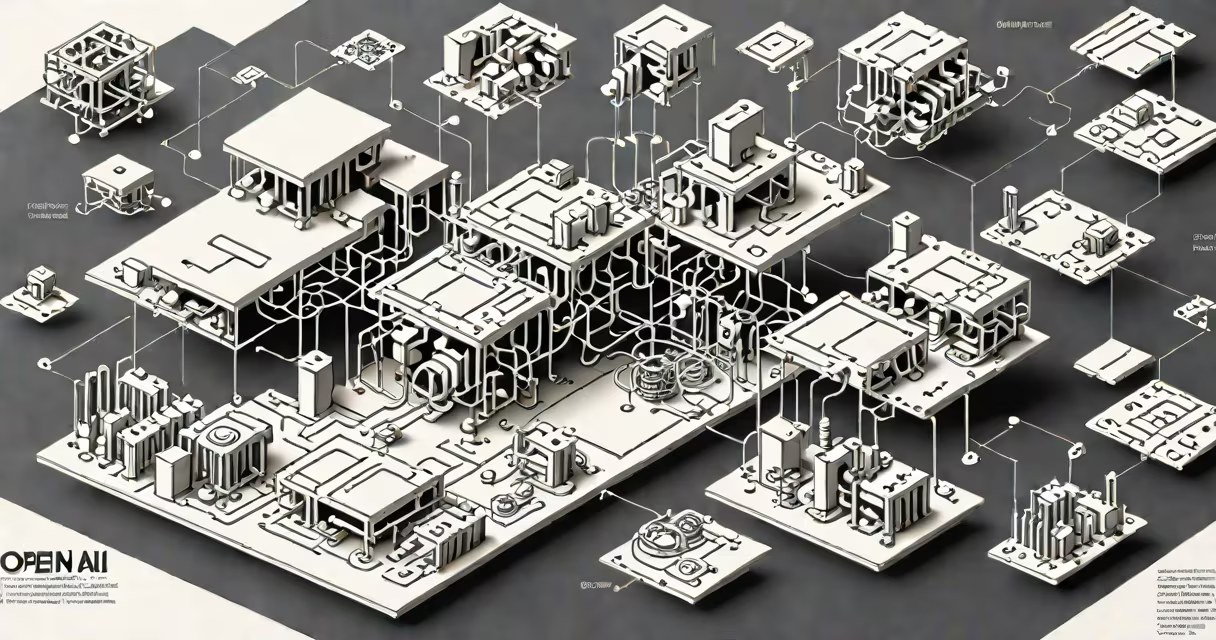
An OpenAI language model is an artificial intelligence system trained using machine learning to understand, generate, and interact with human language. These models process vast amounts of text data to predict and produce coherent, contextually relevant responses.
OpenAI language models operate using a neural network architecture called a transformer. This structure allows the model to analyze input text by breaking it down into tokens (words or parts of words) and processing them in parallel. The model then predicts the most likely sequence of output tokens based on patterns learned during training.
For example, when you input a prompt like "Translate 'Hello' to French," the model identifies the tokens "Translate," "'Hello'," and "to French." It then generates the response "Bonjour" by predicting the most probable sequence of tokens that follow the given input.
OpenAI has developed several language models, each with different capabilities and sizes. The primary models include:
| Model Name | Parameters | Key Features |
|---|---|---|
| GPT-3 | 175 billion | General-purpose language understanding and generation |
| GPT-4 | More than GPT-3 | Advanced reasoning, better accuracy, and broader knowledge cutoff |
| DALL·E | 12 billion | Generates images from textual descriptions |
These models are used in various applications, including chatbots, virtual assistants, content creation, and coding assistance. For instance, OpenAI's language models power tools like GitHub Copilot, which suggests code completions to developers in real-time.
One common misconception is that these models understand language like humans. In reality, they generate responses based on statistical patterns in the data they were trained on. They don't possess true comprehension or consciousness.
OpenAI language models are often confused with other AI systems like rule-based chatbots or simple keyword-matching programs. Unlike these, OpenAI's models generate changing, context-aware responses by using their extensive training data.
While useful, OpenAI language models have limitations. They can sometimes produce incorrect or biased outputs due to the nature of their training data. OpenAI continuously works on improving these models to improve their accuracy and fairness.
For instance, in early versions, GPT-3 occasionally generated offensive or nonsensical responses. OpenAI addressed many of these issues in subsequent updates by refining the training process and implementing safety measures.
An OpenAI language model is a sophisticated AI system designed to understand and generate human-like text. These models use vast amounts of data and advanced neural networks to provide contextually relevant responses, powering many applications assistants.