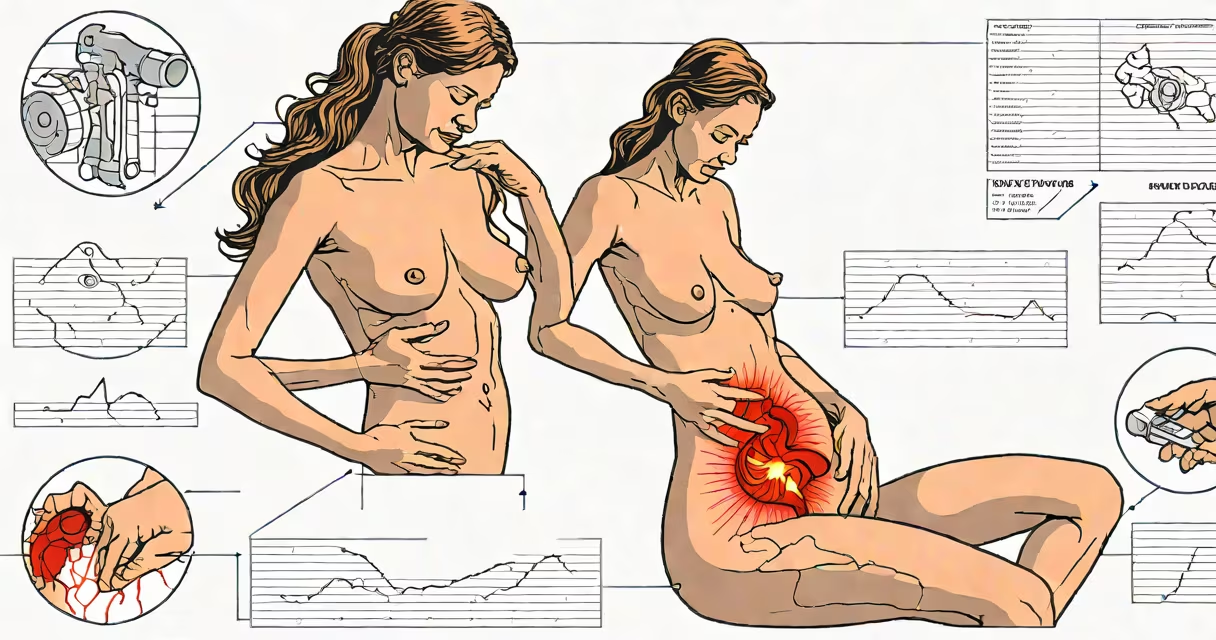
Period cramps and heavy bleeding refer to severe menstrual pain (dysmenorrhea) combined with excessive blood loss (menorrhagia). This combination can disrupt daily life and may indicate underlying conditions.
Menstrual cramps occur when the uterus contracts to shed its lining. These contractions are triggered by hormones called prostaglandins. Heavy bleeding happens when the uterine lining is unusually thick or when the uterus takes longer to contract properly. When both occur together, they can create a cycle of intense pain and excessive blood loss.
The causes of period cramps and heavy bleeding can be divided into primary and secondary:
| Type | Causes |
|---|---|
| Primary | Hormonal imbalances, especially excess prostaglandins, leading to both painful cramps and heavier flow. |
| Secondary | Underlying conditions such as fibroids, endometriosis, or polycystic ovary syndrome (PCOS). |
While some discomfort is normal, severe period cramps and heavy bleeding may require medical attention. According to the Mayo Clinic, you should consult a healthcare provider if:
Treatment depends on the underlying cause. Common approaches include:
For instance, a woman diagnosed with endometriosis might opt for hormonal therapy to manage symptoms. If that doesn't work, she might consider surgery to remove endometrial tissue that has grown outside the uterus.
Many people believe that severe period cramps and heavy bleeding are just part of having a period. However, the American College of Obstetricians and Gynecologists notes that while some discomfort is normal, extreme pain and excessive bleeding are not. These symptoms often indicate an underlying condition that requires treatment.
Another misconception is that drinking water or lying down can alleviate symptoms. While hydration and rest help, they don't address the root cause. If symptoms persist, medical evaluation is essential.
I once experienced severe cramps and heavy bleeding that disrupted my daily routine. After consulting a doctor, I learned that hormonal imbalances were the cause. Adjusting my birth control method improved my symptoms.
Period cramps and heavy bleeding can be managed with proper medical care. If you experience severe symptoms, consult a healthcare provider to identify the underlying cause and explore treatment options. Understanding the difference between normal menstrual symptoms and those requiring medical attention is key to maintaining reproductive health.