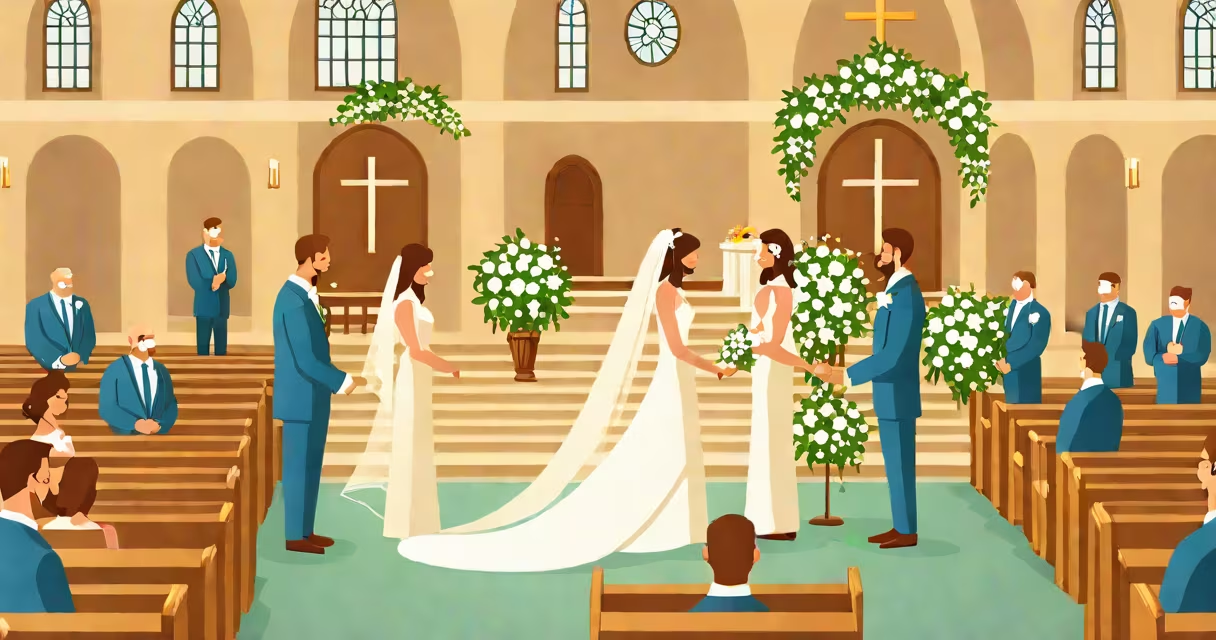
A church wedding requires both legal and religious compliance: a valid marriage license, adherence to the church's doctrine, and participation in pre-marital counseling.
Every state mandates a marriage license for legal recognition. Couples must apply in person, provide identification, and pay fees ranging from $30 to $115. Some states impose a waiting period between application and issuance.
The officiant must return the signed license to the county clerk within days of the ceremony. Failure to file the license voids the marriage's legality. For specifics, check your state's margin requirements for signatures and filing deadlines.
Churches often require couples to complete pre-marital counseling, typically involving 6-12 sessions covering topics like communication, finances, and family planning. The Catholic Church mandates a formal interview with the priest and may require additional documentation if either party was previously married.
Some denominations restrict marriage to members only or require one partner to convert. The Church of Jesus Christ of Latter-day Saints, for example, performs temple weddings exclusively for members who meet specific criteria.
Many churches prohibit weddings during Lent or Advent. Others require the ceremony to occur in a designated sanctuary or chapel. The Eastern Orthodox Church mandates that weddings take place between November 14 and September 1, avoiding fasting periods.
Couples must often choose vows and readings from an approved list. The Methodist Church, for instance, provides standardized vows that emphasize God's role in the union.
Contrary to popular belief, a church wedding isn't inherently more legally binding than a civil ceremony. The license, not the location, determines validity. Some churches allow non-members to marry in their buildings, provided they meet other criteria.
Officiants must be authorized by the state and the denomination. A priest ordained in one state can perform weddings nationwide, but their church may impose additional rules.
When planning my sister's wedding, we discovered our chosen church required a six-month engagement period for counseling. This extended timeline ensured we addressed key issues before the ceremony, strengthening our relationship.
We also learned that the church charged a facility fee separate from the officiant's honorarium. Budgeting for these unexpected costs was important to avoiding last-minute stress.