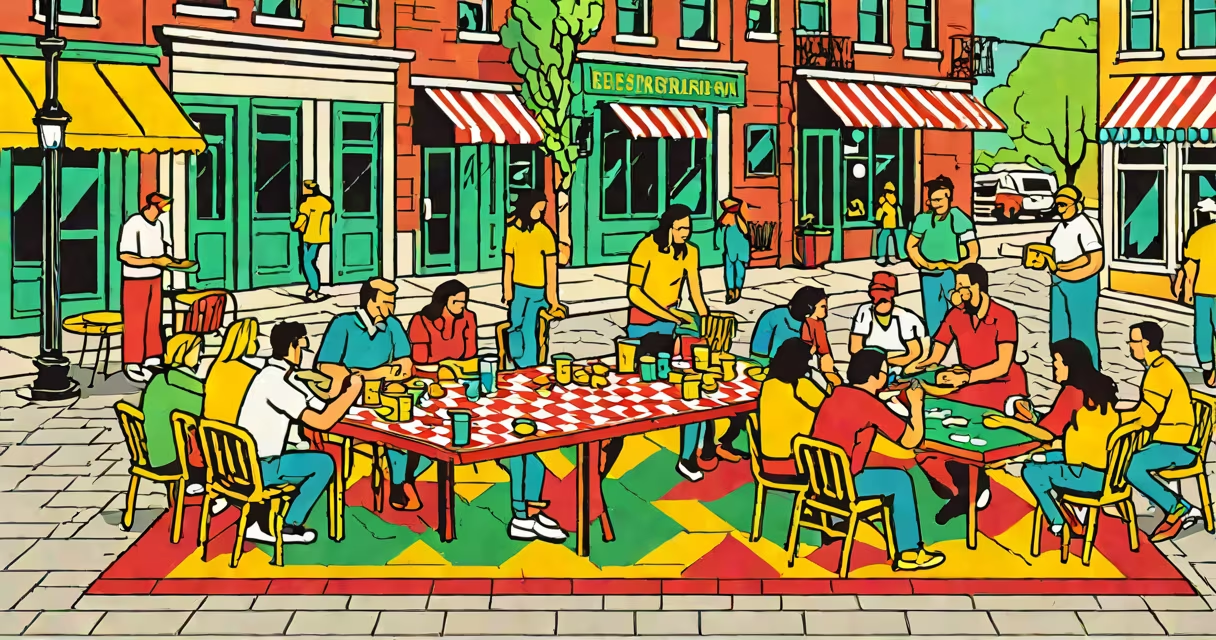
A restaurant street game is an interactive activity set up in outdoor dining areas to entertain guests and create a lively atmosphere. These games often involve physical boards, oversized pieces, or collaborative challenges that encourage social interaction among diners.
Most restaurant street games are designed to be simple enough for anyone to play without prior experience. They typically involve a large playing surface-such as a chalk-drawn board on pavement or a freestanding wooden game table-and oversized pieces. For example, a giant Jenga set or a life-sized chessboard can be set up in a restaurant's patio area. Guests take turns making moves, often while waiting for their food or as part of their dining experience.
Some restaurants incorporate these games into promotions or special events. For instance, a restaurant might host a weekly "giant chess tournament" where participants pay a small fee to join, with the winner receiving a discount on their meal. This drives additional revenue.
| Game Type | Example | Typical Setup |
|---|---|---|
| Classic Board Games | Giant Connect Four | Freestanding wooden frame with oversized discs |
| Physical Challenges | Cornhole | Two raised platforms with bean bags |
| Collaborative Games | Human-sized Jenga | Large wooden blocks stacked in a tower |
Restaurants use street games to create a memorable experience for their customers. According to a study by the National Restaurant Association, 62% of diners consider ambiance a key factor in their dining choice. Interactive elements like street games can turn a simple meal into an event, encouraging guests to stay longer and spend more.
One common misconception is that street games are only suitable for family-friendly restaurants. While they do appeal to families, many upscale or themed restaurants also use them to create a unique atmosphere. For example, a steakhouse might feature a life-sized checkers game to add a touch of nostalgia and fun.
Another myth is that these games require a significant investment. Many restaurants start with low-cost options like chalk-drawn tic-tac-toe or DIY cornhole sets before upgrading to more elaborate setups. The key is to choose games that align with the restaurant's theme and customer base.
To introduce a street game, start by assessing your outdoor space. A flat, open area is ideal for most games. Next, choose a game that fits your restaurant's vibe-whether it's a classic board game, a physical challenge, or a collaborative activity. Finally, promote the game through social media or in-house signage to attract attention and encourage participation.
When I visited a local food truck festival, I noticed how quickly a giant Jenga set drew crowds. Within minutes, people of all ages were lining up to take their turn, creating a buzz around the food vendors nearby. This firsthand observation reinforced how effective street games can be in enhancing the dining experience.