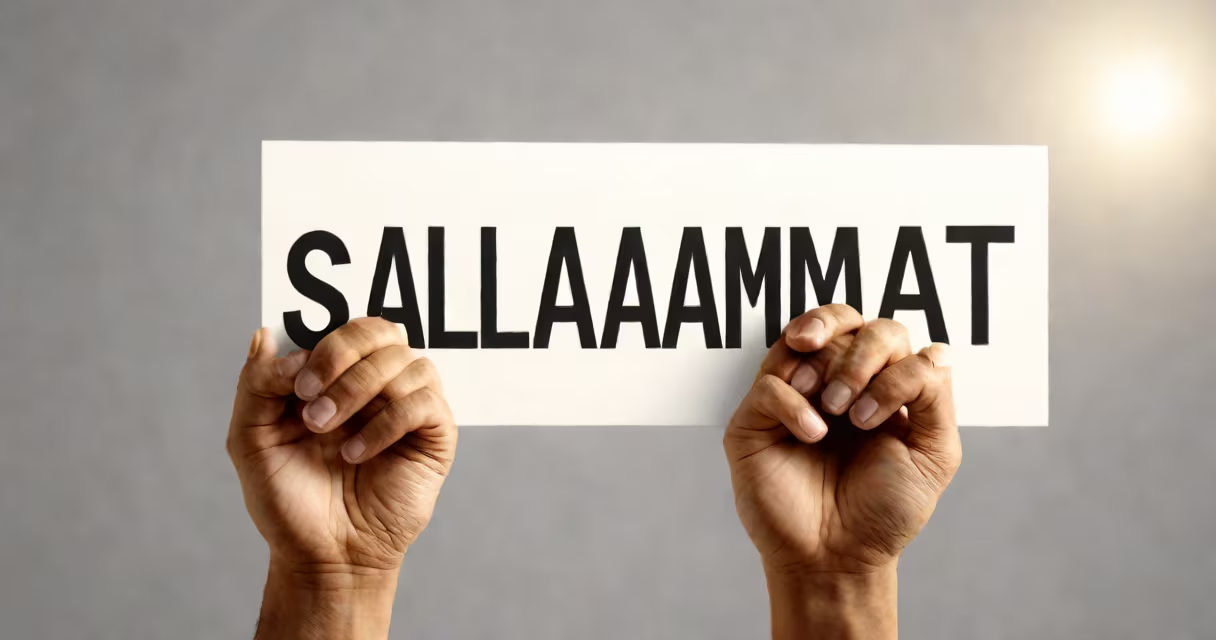
Salamat is an Arabic expression that translates to "thank you" in English. It is widely used across the Arab world to express gratitude, with variations depending on formality and context.
The word salamat comes from the root word "salama," which means safety or peace. When used to say thank you, it conveys a sense of gratitude while also wishing the recipient well-being. The phrase can be adjusted based on the level of formality required in different situations.
There are several ways to say salamat in Arabic, each suited to different contexts:
Salamat is used in various scenarios, from everyday interactions to formal events. For example, in a marketplace, a customer might say "shukran" to a vendor after purchasing an item. In a business meeting, "salamat" would be more appropriate to show respect. The phrase "jazak Allah khair" is often used among friends or family to express deep gratitude.
One common mistake is assuming that "salamat" is only used in formal settings. While it can be used formally, it is also appropriate in many casual contexts. Another misconception is that "shukran" is less meaningful than "salamat." In reality, both phrases are widely accepted and used interchangeably in many situations.
For instance, if someone helps you carry heavy groceries, you might say "shukran" casually. However, if you are thanking a guest for bringing a gift to your home, "salamat" would be more fitting. Understanding these nuances helps in using the right phrase at the right time.
I once observed a situation where a tourist mistakenly used "shukran" in a very formal setting, which was noticed by the locals. While it wasn't a major issue, using "salamat" would have been more appropriate. This highlights the importance of knowing when to use each phrase.